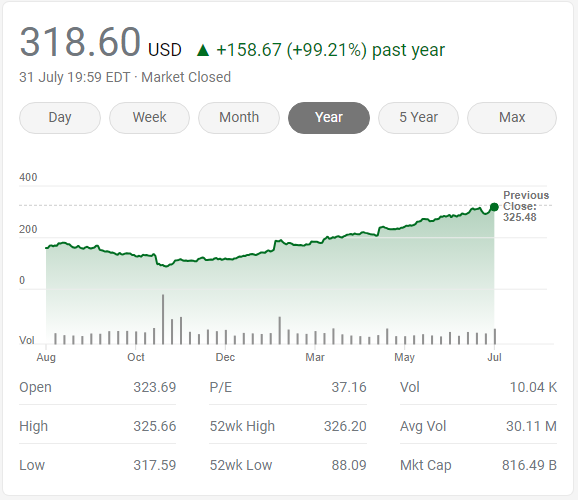
Meta Platforms, Inc. (Nasdaq: META), formerly known as Facebook, has seen its stock price soar in 2023, a straight nine month gain in a massive turnaround after a dismal performance in 2022.
Meta is the parent company of social media apps such as Facebook, Instagram, WhatsApp and Messenger, as well as the Oculus VR headset and other ventures.
Year of efficiency
Meta’s founder and CEO Mark Zuckerberg has declared 2023 as the ‘Year of Efficiency‘ for the company, as it tries to cut costs and streamline its operations. The company has also announced layoffs of about 10% of its workforce in 2022 and 2023, as part of its restructuring efforts.
Meta’s stock has almost doubled since January, making it among the top performers on the S&P 500. The company has also seen a boost in the number of daily active users on Facebook, reaching two billion as of the end of December 2022. Meta’s net worth is currently at $89.9 billion, making Zuckerberg the 12th wealthiest person on the planet, according to Bloomberg’s Billionaire Index.
Surge
Meta’s stock surge comes after a sharp decline in 2022, when the company faced regulatory scrutiny, public backlash and technical glitches over its plans to expand into the metaverse, a virtual reality world where people can interact with each other and through digital content.
Meta’s stock plummeted by over 60% last year, as Zuckerberg struggled to sell Wall Street on his vision for the future of social media.
Future
Meta is still betting on the metaverse as its long-term goal, and has been investing heavily in AI, VR and AR technologies. The company is reportedly working on a new social media app called ‘Instagram for your thoughts‘, which would allow users to share their thoughts and emotions using brain-computer interfaces.
The app could launch as soon as next month, according to latest reports.
In July 2023, Elon Musk rebranded Twitter to X – another step in his master plan to emulate Chinese super app WeChat.
Mr Musk has long said that he wants to transform his social media firm, which he bought last year for $44 billion, into a much larger platform.
He has previously praised WeChat – a so-called ‘everything app‘ that combines chat, dating, payments and social media – and has said creating something “even close to that with Twitter… would be an immense success”.
In a post on X this week, Mr Musk said that over the coming months, ‘we will add comprehensive communications and the ability to conduct your entire financial world’.
He will hope that growing X will lead to a revenue recovery – the company has lost almost half its advertising revenue since Mr Musk bought it, and it is struggling under a heavy debt load.
Established businesses
He has successfully disrupted several industries with his ventures such as Tesla, SpaceX, Neuralink, and The Boring Company. He may be able to bring some fresh ideas and solutions to the social media space with X. It will be interesting to see if he adopts an existing digital payment system or develops his own. XRP, for instance – could be a good fit.
What is WeChat?
WeChat is a ‘super-app’ that combines messaging, social media, payments, e-commerce, entertainment, news, and more. It is owned by Tencent, one of China’s largest tech companies, and has over 1.2 billion monthly active users, mostly in mainland China.
Everything App
WeChat users can do almost anything within the app, from ordering food to booking tickets to paying bills, without leaving the app. WeChat also hosts millions of mini-apps that are created by third-party developers and businesses to offer various services and functions to users. It is like WhatsApp, Facebook, Apple Pay, Uber, Amazon, Tinder and a whole lot more rolled into one. Launched by technology giant Tencent in 2011. WeChat is now used by almost all of China’s 1.4 billion pupulation (1.2 billion users seems to be the latest concensus).
Will it work in the West?
WeChat’s huge success in China is arguably down to two major factors. For one, most people in China access WeChat on smartphones, rather than desktop computers, due to the relatively late development of the internet in the country. And two, China’s lack of competition regulation – which contrasts with most Western countries – allows an app like WeChat to potentially effectively block rival platforms.
Could Mr Musk make a similar app work outside China? We may be finding out soon – and experts believe it may all depend on digital payments and his ‘system’ to implement this everyday task.
A major difference between China and the West is the widespread adoption of digital payment technology.
While shops in China are legally obliged to accept cash, in practice, digital payments are far more common.
This difference, may be an obstacle to Mr Musk’s ambitions. It will take the Western world longer to implement a truly cashless or credit card free society.
Why does Musk want to emulate WeChat?
Elon Musk has been an admirer of WeChat for a long time. He once said that WeChat is ‘so usable and helpful to daily life‘ in China, and that he wanted to achieve something similar with Twitter, no X. He also said that buying Twitter was an ‘accelerant’ to creating X, the everything app.
X The company likely to bring you the ‘Super’ App or the ‘Everything’ App
Mr Musk has hinted that he plans to add more features and functionalities to Twitter, such as video, communications, and financial services. He also said that the Twitter name did not make sense in the new context, so he decided to rename it as X, a brand that he has used before for his online banking business that later became PayPal.
Dystopia or Utopia – A dark sideor a force for good?
Is the Super App a natural progression and development for good or yet another infringement on our freedom, liberty and privacy. Is it even necessary?
In China, we have witnessed a level of state control interference over the internet that has reportedly made it extremely dangerous for people to speak out against the government on WeChat.
It is not unusual for dissenting voices to have their accounts suspended for days or weeks for something they have said in Chats or on Moments.
Even people sharing seemingly uncontroversial information have found themselves on the wrong side of government censors and had their accounts and chat groups shut down.
Digital life footprint
Everything Everywhere – a super ‘system’ monitoring what you do, what you buy, where you go, when, how, who you talk to, what you say – all your movements, comments, discussions and activity will be known by someone else, somewhere, even your private discussions, holiday activity and medical details will be visible in the ‘system’.
Some may say this has happened already, but this ‘super-app’ will be a massive step closer to ‘life without privacy’.
Apple shares previously failed to close at levels that would have given the company a market cap of $3 trillion, despite a promising intra-day move in January 2022.
Milestone
Apple has become the first publicly traded company ever to be worth $3 trillion. The company’s market valuation reached this milestone on January 3rd, 2022. Apple’s stock briefly eclipsed $182.86 a share before closing at $182.01. The milestone is mostly symbolic but it represents investor recognition of Apple’s success over the past few years as the company has reported several record-breaking quarters of big growth in all of its product lines.
Apple is not just a hardware player – it has an even bigger slice of the tech’ consumer pie than you may imagine, especially in the cloud computing arena.
Second time lucky
Apple has regained its $3 trillion valuation to become the first-listed company, in modern times, to reach the $3 trillion milestone again. It acheived this on 30th June 2023. Shares climbed more than 2% to hit a record $193.97. However, by direct comparison and by todays valuation, the East India Trading Company beat Apple to this accolade long-a-go in the 17th Century having acheived a higher value equivalent to $7 trillion in todays money.
Threads is a new app, owned by Meta (Facebook), and built by theInstagram team, for sharing public conversations akin to Twitter. You log in using your Instagram account and posts can be up to 500 characters long and include links, photos, and videos with a 5 minute limit. Threads is Meta’s first app envisioned to be compatible with an open social networking protocol
Threads is seen by many as a direct competitor toTwitter, the social media platform owned by billionaire Elon Musk. Threads has been setting records for user growth since its launch on July 5, 2023, with politicians, celebrities, news creators and users joining the platform. Threads surpassed 100 million user ‘sign-ups’ within five days of launch according to information from Meta.
Projected to create revenue of $8 billion by 2025
Threads is projected to contribute a staggering$8 billion to Meta’s annual revenue by 2025. The report further highlights that Threads has already garnered 1 million sign-ups and is on track to reach an impressive milestone of 1 billion users in the near future.
User drop-off to be expected?
However, some recent news reports suggest that Threads has encountered challenges in retaining its users and competing with Twitter. Threads ‘daily active users’ is reporteded to have fallen from 49 million two days after its launch, to 23.6 million users about three weeks later in July 2023, according to reports. The app’s average usage time also fell from 21 minutes to 6 minutes over the same timeframe.
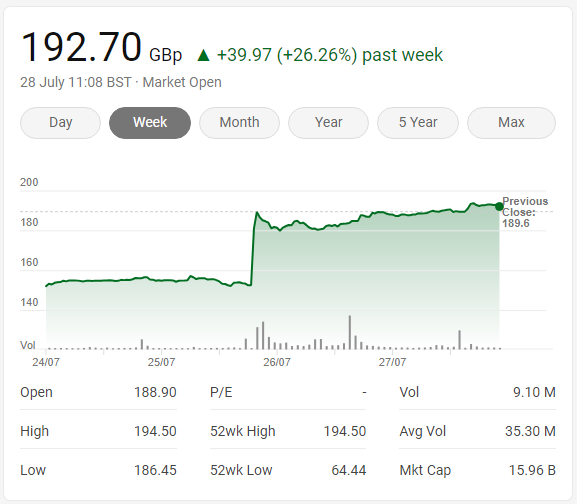
Rolls-Royce share price soared by 20% in july 2023 after it raised its profit guidance and reported strong demand in its jet engine and defence businesses.
The company, which makes engines for aeroplanes, ships and submarines, repoertedly said it expects to make between £1.2 billion and £1.4 billion in underlying operating profit this year, up from its previous forecast of £800 million to £1 billion.
The profit upgrade reflects the improvement in Rolls-Royce’s operations under its new chief executive, who took over in January with a mandate to turn the companyaround. A transformation programme was launched to boost productivity, efficiency and innovation across all divisions. It appears to be working.
Drivers
One of the main drivers of Rolls-Royce’s recovery is the revival in air travel and flying hours as Covid restrictions were eased. The company charges customers for the number of hours its jet engines run, which have dramatically rebounded from the slump caused by the pandemic. Rolls-Royce said it expects to generate £750 million in free cash flow this year, up from its previous target of £500 million.
Another factor behind Rolls-Royce’s growth is the increased defence spending following Russia’s invasion of Ukraine. The company makes propulsion systems for Royal Navy warships and submarines, as well as engines for military aircraft. Rolls-Royce reportedly said its defence unit had delivered ‘exceptional‘ performance and secured new contracts.
Share price hits 52 week high!
Rolls-Royce’s share price hit its highest level since March 2020, when the prospect of travel bans caused aviation-related stocks to plunge. The stock has almost doubled in value this year, making it the best-performing stock on the FTSE 100 over the past six months.
Analysts and investors have welcomed the signs of progress at Rolls-Royce, which had struggled with profitability and cash flow issues even before the pandemic.
Rolls-Royce is scheduled to report its half-year results next week, which are expected to show profits of between £660 million and £680 million some analysts suggest, more than double market expectations. The company said it remains confident in its medium-term outlook and its ability to deliver value for customers and shareholders.
Definitely one to watch. It’s been on my ‘share radar’ for a couple years now. Share price hit intraday high of £1.94 on 28th July 2023
British Gas owner Centrica and Shell see profits soar as bills rise.
Profit for the six months ending in June 2023 for British Gas owner Centrica rose to around £1.34bn from £262m a year earlier. The rise in profits came from the company’s nuclear and oil and gas business, rather than from the British Gas energy supply business which performed much worse. The average annual British Gas profit has been £584m in recent years.
Profit increase down to Ofgem ‘tweak’
However, the profit boom is surprisingly down to a ‘tweak’ to the regulator Ofgem’s energy price cap that allows the supplier to recover elements of the costs of supplying its 10 million customers during the energy crisis.
The supplier’s current profit highs are likely to upset consumer groups that have campaigned against the supplier’s treatment of vulnerable energy customers as record energy market prices forced millions into fuel poverty. Some have called the profit making ‘legalised robbery’, and demanded to bring energy into public ownership.
Dividend plans
Centrica plans to raise its interim dividend by around a third but remarks that its underlying profitability will ease significantly in the second half of the year. Energy firms saw their profit margins hit last year when wholesale prices surged in the wake of Russia’s invasion of Ukraine. Wholesale prices also jumped as th UK emerged from the dark cloud Covid as markets undicated that the UK was ill prepared for the enconomic recovery. Brexit blues didn’t help either.
The energy price cap remains £1,000 above its pre-pandemic average, despite oil and natural gas costs easing significantly. It is predicted by industry ‘experts’ to remain around the £2,000 a year average for the coming winter months, maintaining excessive pressure on household budgets.
Some ‘windfall’ tax recovery, over the years will apparently go back to ‘society’, British Gas says.
Centrica chief executive reportedly said that a lot of the firm’s profits were ‘going back into society’.
‘I know it’s difficult to see the word profits, or dividends, or similar words when people are having a tough time. I’m very conscious of this,’ he reportedly said.
Windfall
‘Bear in mind, over the next couple of years we are expecting to pay a windfall tax of ‘probably‘ well over £600m on our UK gas business off the back of the profits that we’re seeing, so a lot of this is going back into society.’
A contentious thought
A business needs to make profits otherwise there is no business. It exits to make a profit and to supply a service or product – but it is about how that business makes its profit, isn’t it?
Token windfall tax temporarily slapped on by the UK government is only payable on UK profits. Oil and gas recovery companies will only pay a tax windfall on UK related profits not on overseas returns!
Profits from fossil fuel recovery invested in greener energy for the future – that’s a topic for another article.
Crypto, short for cryptocurrency, is a digital or virtual currency that uses cryptography for security and operates independently of a central bank. Cryptocurrencies are decentralised currencies, meaning they’re neither issued nor governed by a central bank.
Some cryptocurrencies are issued by their developers, while others are generated by their respective network algorithms. They exist and operate on a public ledger called a blockchain, which records all crypto transactions. Blockchain encryption is designed to make all transactions safe and secure from tampering, counterfeit, and other forms of fraudulent transactions.
‘Do you know what crypto is? Nope, absolutely no idea, do I need to?’
Digital Wallet
Cryptocurrencies can be stored in a ‘digital wallet’ on a smartphone or computer, and owners can send them to people to buy things. Although we can’t see or touch cryptocurrencies, they do hold value. Cryptocurrencies are now being used to purchase many different products and services, and some people are even buying cars and houses with their digital assets. They’re not widely used at the moment, but many believe the use of cryptocurrencies could one day become a common way to trade.
Is there a future for a digital currency?
However, the future of cryptocurrency is uncertain and opinions are divided. Some predict that institutional money entering the market and the possibility of crypto being floated on the Nasdaq could add credibility to blockchain and its uses as an alternative to conventional currencies. Others predict that regulators around the world might come together on a global framework for crypto regulation, but this looks unlikely right now. It is impossible to predict the future of the crypto market with absolute certainty.
Despite a strong start to 2023, some analysts remain cautious on growth and predict pressure for digital assets. Cryptography and blockchains will continue to be integral parts of the modern economic toolkit.
In conclusion, while there is no consensus on whether crypto is the future of currency, it is clear that it has the potential to play a significant role in the future of finance.
Stop crypto?
There is evidence to suggest that the US, EU, UK and other nations are trying to regulate the crypto market. Some people in the crypto world believe that recent attempts to ring fence the crypto industry and cut off its connectivity to the banking system are reminiscent of a little-known Obama-era program called ‘Operation Choke Point’. This refers to a 2013 US government initiative that sought to cut off undesirable industries from banking services.
Meltdown
The sector was already under pressure, after prices of virtual currencies collapsed last year. Further damage came from the meltdown of several high-profile firms, including FTX, run by the so-called ‘Crypto King’ Sam Bankman-Fried, whom prosecutors have accused of conducting ‘one of the biggest financial frauds’ in US history. Jolted by the turmoil, US regulators stepped up their policing of the sector, which authorities say has been on notice since at least 2017 and that their activity runs afoul of US financial rules intended to protect US investors.
Crackdown?
The campaign has yielded a steady drumbeat of charges against crypto firms and executives, alleging violations ranging from failing to register properly with authorities and provide adequate disclosure of their activity to, in some cases, more damaging claims such as mishandling of consumer funds and fraud. The crackdown culminated this month in legal actions against two of the biggest platforms: Coinbase and Binance.
However, during a hearing on cryptocurrency and blockchain technology regulation, Senate Banking Committee Chairman Mike Crapo shared his belief that the United States would not be able to succeed in banning Bitcoin.
In conclusion, while there is evidence that the US is trying to regulate the crypto market, it is not clear if they are trying to stop it completely and there is also evidence that suggests that the US would not be able to succeed in banning Bitcoin.
What was operation choke point?
‘Operation Choke Point’ was allegedly an initiative of the United States Department of Justice that began in 2013 under the Obama administration. The program investigated banks in the United States and the business they did with firearm dealers, payday lenders, and other companies believed to be at a high risk for fraud and money laundering. It was an attempt by President Obama’s Department of Justice, the Federal Deposit Insurance Commission, the Consumer Financial Protection Bureau, and other government agencies to cut off banking and financial services for small businesses and industries that they deemed to be illegal enterprises or otherwise undesirable.
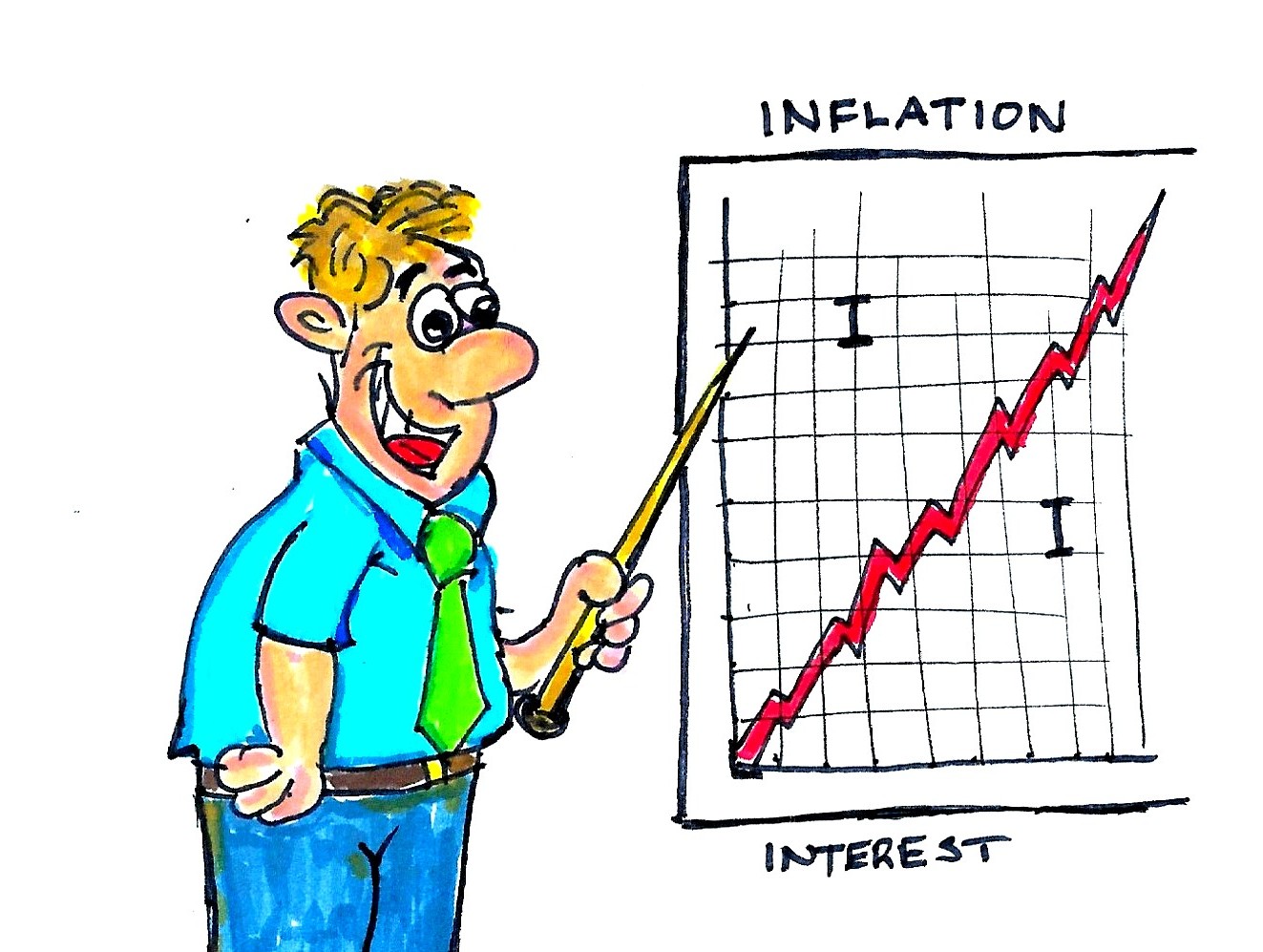
The UK is facing a cost of living crisis as inflation has soared to its highest level in decades. The Bank of England has raised interest rates 13 times since December 2021 in an attempt to bring inflation back down to its original target of 2%. But what does this mean for consumers, savers and borrowers?
What is inflation and why is it rising?
The current UK interest rate is now: 5.0%
Inflation is the term used to describe rising prices. How quickly prices go up is called the rate of inflation. Inflation affects the purchasing power of money, meaning that the same amount of money buys less goods and services over time.
The rate of inflation in the UK is measured by two main indicators: the consumer price index (CPI) and the retail price index (RPI). The CPI is based on a basket of products and services that people typically buy, while the RPI also includes mortgage interest payments.
According to the Office for National Statistics (ONS), the CPI inflation rate was 8.7% in the year to May 2023, while the RPI inflation rate was 11.4%. This means that on average, prices were 8.7% and 11.4% higher respectively than they were a year ago.
The main drivers of inflation in the UK are:
Energy bills: Wholesale gas prices have surged due to global supply disruptions since the pandemic hit in 2020, geopolitical tensions, the war in Ukraine and increased demand. The government introduced an energy price guarantee to freeze energy prices for six months, but prices still went up 27% in October 2022. The energy price guarantee has been extended.
Shortages: The pandemic and Brexit have caused labour and supply chain issues that have affected many sectors, such as food, clothing, construction and hospitality. This has led to higher costs and lower availability of some goods and services.
Demand: As the economy recovers from the lockdowns, consumer spending has picked up, especially on leisure and travel activities. This has increased the demand for some goods and services, pushing up their prices.
How do interest rates affect inflation?
Interest rates are the cost of borrowing money or the reward for saving money. The Bank of England sets the bank rate, which is the interest rate it charges to commercial banks that borrow from it. The bank rate influences other interest rates in the economy, such as mortgage rates, loan rates and savings rates.
Interest rates climbed ever higher as the Bank of England lost control of inflation
The Bank of England uses interest rates as a tool to control inflation. The Bank has a target to keep inflation at 2%, but the current rate is more than five times that. When inflation rises, the Bank increases interest rates to make borrowing more expensive and saving more attractive. This reduces the amount of money circulating in the economy and slows down rising prices.
The Bank has raised interest rates 13 times since December 2021, from 0.1% to 5.0%. This is the highest level since March 2009, when interest rates were cut to a record low of 0.5% following the global financial crisis.
What does higher inflation mean for your money?
Higher inflation means that your money loses value over time. For example, if you had £100 in April 2022 and inflation was 8.7%, you would need £108.70 in April 2023 to buy the same amount of goods and services.
Higher inflation also affects your income, spending, saving and borrowing decisions.
Income: If your income does not keep up with inflation, you will have less purchasing power and lower living standards. For example, if your salary was £30,000 in April 2022 and increased by 2% in April 2023, you would earn £30,600. But if inflation was 8.7%, you would need £32,610 to maintain your purchasing power.
Spending: Higher inflation may encourage you to spend more now rather than later, as you expect prices to rise further in the future. However, this may also reduce your savings and increase your debt.
Saving: Higher inflation reduces the real return on your savings, meaning that your savings grow slower than prices. For example, if you had £10,000 in a savings account that paid 1% interest in April 2022, you would have £10,100 in April 2023. But if inflation was 8.7%, your savings would be worth only £9,300 in real terms.
Borrowing: Higher interest rates make borrowing more expensive, meaning that you have to pay more interest on your loans and mortgages. For example, if you had a £200,000 mortgage with a 25-year term and a 2% interest rate in April 2022, your monthly payment would be £848. But if the interest rate rose to 4.5% in April 2023, your monthly payment would increase to £1,111. Mortgage interest rates hit 6% in July 2023.
How can you protect your money from inflation?
There are some steps you can take to protect your money from inflation, such as:
Review your budget: Track your income and expenses and see where you can cut costs or increase income. Try to save more and spend less, especially on non-essential items.
Shop around: Compare prices and deals for the goods and services you need or want. Look for discounts, vouchers and cashback offers. Switch providers or suppliers if you can find better value elsewhere.
Pay off debt: This is a priority! If you have high-interest debt, such as credit cards or overdrafts, try to pay it off as soon as possible. This will reduce the amount of interest you pay and free up more money for saving or investing.
Save smartly: Look for savings accounts or products that offer interest rates higher than inflation (tricky to find). Consider diversifying your savings into different types of assets, such as stocks, bonds, property or gold. These may offer higher returns than cash in the long term, but bear in mind they also carry more risk and volatility.
Invest wisely: If you have a long-term goal, such as retirement or buying a house, you may want to invest some of your money in the stock market or other assets that can grow faster than inflation. However, you should only invest what you can afford to lose and be prepared for the ups and downs of the market. You should also seek professional advice before making any investment decisions.
Conclusion
Inflation and interest rates are two important factors that affect the UK economy and your personal finances. The UK is currently experiencing high inflation due to various factors, such as energy prices, shortages and demand. The Bank of England has raised interest rates to try to bring inflation back down to its target of 2%. Higher inflation and interest rates have implications for your income, spending, saving and borrowing decisions. You can take some steps to protect your money from inflation, such as reviewing your budget, shopping around, paying off debt, saving smartly and investing wisely.
How well has the Bank of England done to keep inflation at or close to 2%?