
What is AI?

AI stands for Artificial Intelligence, which is the ability of machines to perform tasks that normally require human intelligence. AI can involve various aspects of cognition, such as perceiving, reasoning, learning, problem-solving, and even creativity.

Types of AI

AI can be classified into different types based on the level of intelligence and the scope of tasks that machines can perform. One common way to categorise AI is by using the following four types:

  • Narrow AI: This is the most common and basic type of AI, which refers to machines that can perform specific tasks very well, but cannot generalize to other domains or situations. Examples of narrow AI include speech recognition, face recognition, web search engines, recommendation systems, self-driving cars, and chess-playing programs.
  • General AI: This is the type of AI that aims to achieve human-like intelligence across a wide range of domains and tasks. General AI would be able to understand and learn from any kind of data, reason and solve problems, communicate and interact with humans, and exhibit common sense and creativity. However, general AI does not exist yet, and it is considered a long-term goal of AI research.

  • Super AI: This is the type of AI that would surpass human intelligence in all aspects, including speed, memory, knowledge, creativity, and wisdom. Super AI would be able to outperform humans in any task and domain, and potentially pose existential risks to humanity. Super AI is also a hypothetical concept that has not been achieved or proven yet.
  • Artificial neural networks: This is a type of AI that mimics the structure and function of biological neural networks, which are the basis of human brain activity. Artificial neural networks consist of layers of interconnected nodes that process information and learn from data. Artificial neural networks are widely used for various applications of AI, such as computer vision, natural language processing, machine learning, and deep learning.

Applications of AI

AI has many applications in various fields and industries, such as:

  • Healthcare: AI can help diagnose diseases, analyze medical images, design drugs, assist surgeries, monitor patients, and provide personalized care.
  • Education: AI can help personalize learning, assess students’ progress, provide feedback, tutor students, grade assignments, and create educational content.
  • Business: AI can help optimize operations, enhance customer service, automate tasks, analyze data, generate insights, improve decision making, and increase productivity.
  • Entertainment: AI can help create music, art, games, movies, and other forms of entertainment.

  • AI can also help recommend content to users based on their preferences and behaviour.
  • Security: AI can help detect threats, prevent cyberattacks, enhance surveillance, identify frauds, enforce laws, and protect privacy.
  • Social: AI can help communicate with humans through natural language processing and speech synthesis. AI can also help understand human emotions and behavior through sentiment analysis and facial expression recognition.

Challenges and limitations of AI

AI also faces many challenges and limitations that need to be addressed by researchers and users. Some of these include:

  • Ethical: AI raises many ethical issues such as bias, fairness, accountability, transparency, privacy, human dignity, and social impact. How can we ensure that AI is aligned with human values and does not harm humans or society?
  • Technical: AI still faces many technical challenges such as scalability, robustness, explainability, interpretability, generalization, and adversarial attacks. How can we improve the performance, reliability, and security of AI systems?
  • Societal: AI also has many societal implications such as employment, education, regulation, governance, and collaboration. How can we adapt to the changes and opportunities that AI brings to our lives, work, and society?

AI is here to stay – it’s all about how we use it for the betterment of ‘humankind’. Please, let’s use it safely, responsibly and for the good!

Big tech companies heavily involved in the development of AI products

OpenAI

Microsoft

Alphabet/Google

Amazon

Nvidia

AMD

Arm

Meta

What is Crypto?

Cryptocurrency

Cryptocurrency

Crypto, short for cryptocurrency, is a digital or virtual currency that uses cryptography for security and operates independently of a central bank. Cryptocurrencies are decentralised currencies, meaning they’re neither issued nor governed by a central bank. 

Some cryptocurrencies are issued by their developers, while others are generated by their respective network algorithms. They exist and operate on a public ledger called a blockchain, which records all crypto transactions. Blockchain encryption is designed to make all transactions safe and secure from tampering, counterfeit, and other forms of fraudulent transactions.

Crypto
Do you know what crypto is? Nope, absolutely no idea, do I need to?’

Digital Wallet

Cryptocurrencies can be stored in a ‘digital wallet’ on a smartphone or computer, and owners can send them to people to buy things. Although we can’t see or touch cryptocurrencies, they do hold value. Cryptocurrencies are now being used to purchase many different products and services, and some people are even buying cars and houses with their digital assets. They’re not widely used at the moment, but many believe the use of cryptocurrencies could one day become a common way to trade.

Is there a future for a digital currency?

However, the future of cryptocurrency is uncertain and opinions are divided. Some predict that institutional money entering the market and the possibility of crypto being floated on the Nasdaq could add credibility to blockchain and its uses as an alternative to conventional currencies. Others predict that regulators around the world might come together on a global framework for crypto regulation, but this looks unlikely right now. It is impossible to predict the future of the crypto market with absolute certainty.

Despite a strong start to 2023, some analysts remain cautious on growth and predict pressure for digital assets. Cryptography and blockchains will continue to be integral parts of the modern economic toolkit.

In conclusion, while there is no consensus on whether crypto is the future of currency, it is clear that it has the potential to play a significant role in the future of finance.

Stop crypto?

There is evidence to suggest that the US, EU, UK and other nations are trying to regulate the crypto market. Some people in the crypto world believe that recent attempts to ring fence the crypto industry and cut off its connectivity to the banking system are reminiscent of a little-known Obama-era program called ‘Operation Choke Point’. This refers to a 2013 US government initiative that sought to cut off undesirable industries from banking services.

Meltdown

The sector was already under pressure, after prices of virtual currencies collapsed last year. Further damage came from the meltdown of several high-profile firms, including FTX, run by the so-called ‘Crypto King’ Sam Bankman-Fried, whom prosecutors have accused of conducting ‘one of the biggest financial frauds’ in US history. Jolted by the turmoil, US regulators stepped up their policing of the sector, which authorities say has been on notice since at least 2017 and that their activity runs afoul of US financial rules intended to protect US investors.

Crackdown?

The campaign has yielded a steady drumbeat of charges against crypto firms and executives, alleging violations ranging from failing to register properly with authorities and provide adequate disclosure of their activity to, in some cases, more damaging claims such as mishandling of consumer funds and fraud. The crackdown culminated this month in legal actions against two of the biggest platforms: Coinbase and Binance.

However, during a hearing on cryptocurrency and blockchain technology regulation, Senate Banking Committee Chairman Mike Crapo shared his belief that the United States would not be able to succeed in banning Bitcoin.

In conclusion, while there is evidence that the US is trying to regulate the crypto market, it is not clear if they are trying to stop it completely and there is also evidence that suggests that the US would not be able to succeed in banning Bitcoin.

What was operation choke point?

‘Operation Choke Point’ was allegedly an initiative of the United States Department of Justice that began in 2013 under the Obama administration. The program investigated banks in the United States and the business they did with firearm dealers, payday lenders, and other companies believed to be at a high risk for fraud and money laundering. It was an attempt by President Obama’s Department of Justice, the Federal Deposit Insurance Commission, the Consumer Financial Protection Bureau, and other government agencies to cut off banking and financial services for small businesses and industries that they deemed to be illegal enterprises or otherwise undesirable.

Digital currencies also became a target.

Virgin Galactic rocket plane enters commercial service

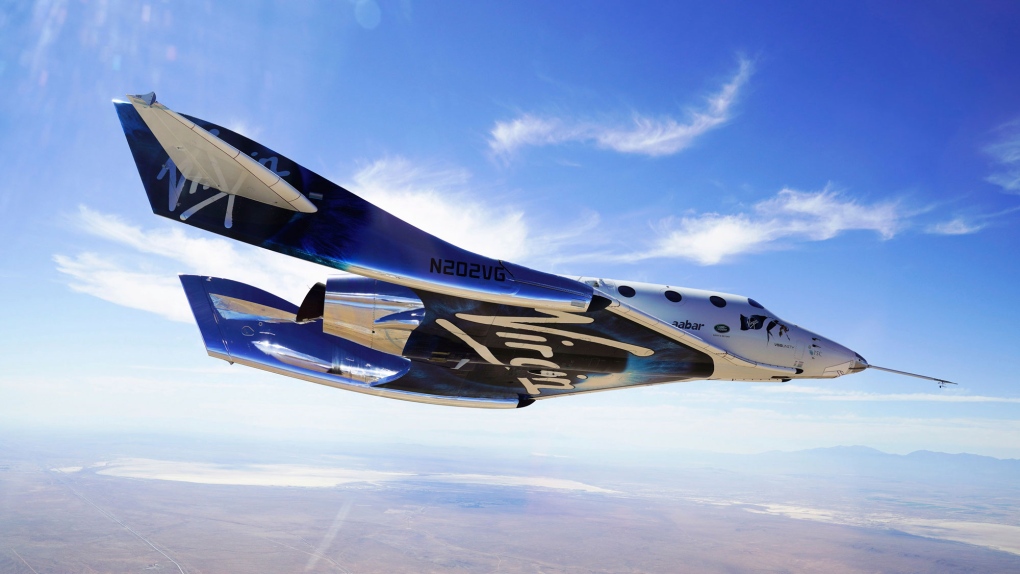
It’s taken nearly 20 years, but Sir Richard Branson has finally begun commercial space flights with his Virgin Galactic rocket ship, Unity

On 29th. June 2023, Sir Richard Branson’s Virgin Galactic successfully launched its first commercial flight to the edge of space. The flight was carried out by the company’s SpaceShip Two space plane Unity with a special passenger on board: the company’s billionaire founder Richard Branson. Branson was accompanied by three crewmates and two pilots on the historic flight.

Virgin Galactic
Virgin Galactic 1

The flight took off from New Mexico in the US after being carried into launch position by Virgin Galactic’s carrier plane, Eve. The rocket ship reached an altitude of 53.5 miles above Earth’s surface before gliding back down to land at Spaceport America .

The vehicle flew high over the New Mexico desert on Thursday to enable three Italian astronauts to conduct science experiments in weightless conditions. Sir Richard will now begin sending up the 800 or so space flight customers who’ve bought tickets to ride on Unity.

72 minute mission

The 72-minute mission took off from Spaceport America at 08:30 local time (14:30 GMT) and was livestreamed around the world.

Just under an hour into the mission, after reaching an altitude of 13,600m (44,500ft), the carrier plane, Eve, then released Unity to ignite its engine and boost up to the edge of space. At the top of its climb, the rocket ship was at an altitude of 279,00ft (85km), touching the edge of space.

Success

This successful launch marks a major milestone for Virgin Galactic and the space tourism industry as a whole. With this achievement, Virgin Galactic has joined a small club of companies that can ferry paying customers to space, including Elon Musk’s SpaceX and Jeff Bezos’s Blue Origin.

Sir Richard Branson’s Virgin Galactic has made history with its successful rocket ship launch on June 29th, 2023. This achievement marks a significant milestone for the space tourism industry and opens up new possibilities for commercial space travel in the future.