

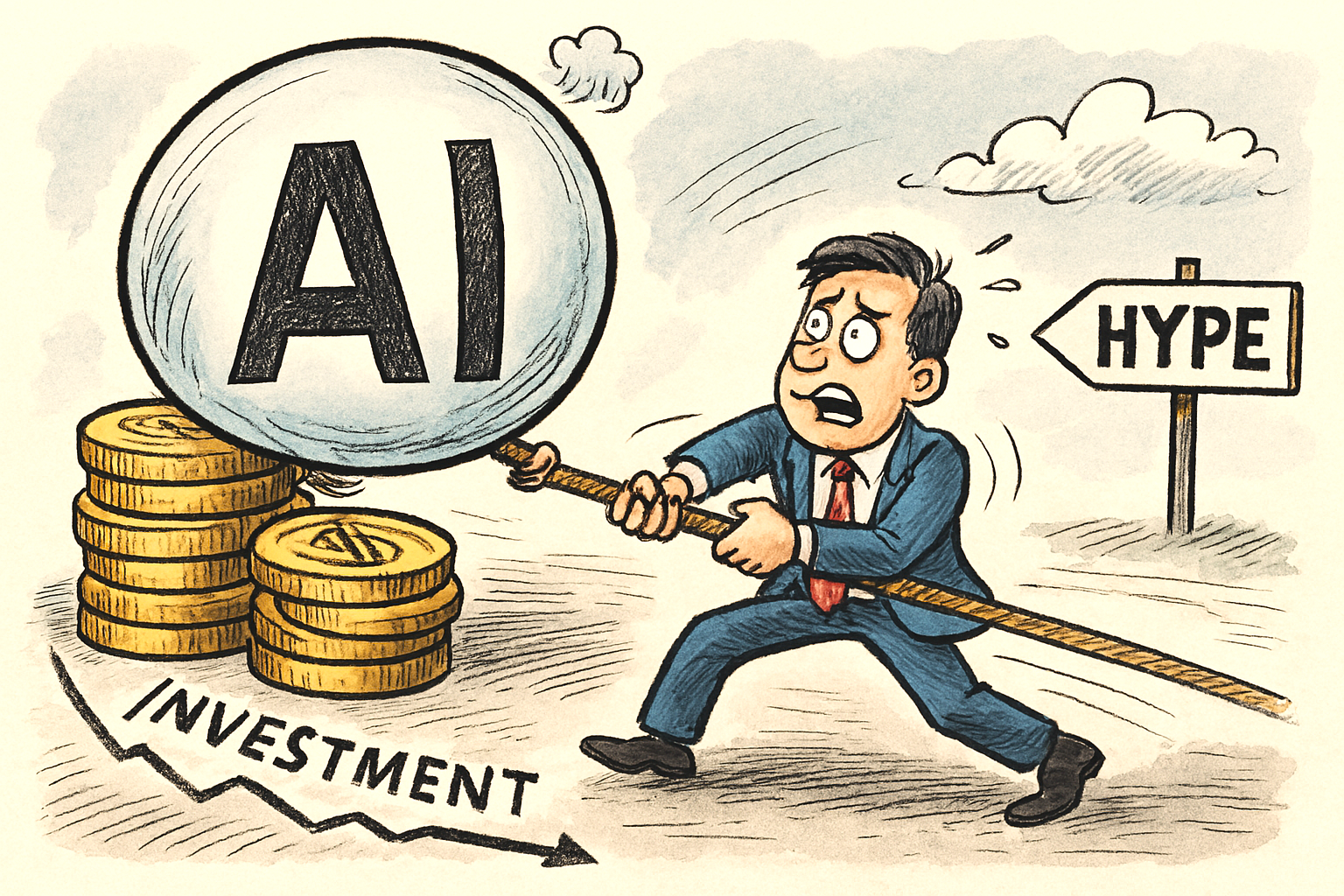
Few technologies have attracted capital as aggressively as artificial intelligence. In just a few years, AI has shifted from a promising research frontier to the centrepiece of global corporate strategy.
Yet as investment has surged, so too has scepticism. Many analysts now argue that the pace of spending has outstripped both practical readiness and measurable returns.
Recent research suggests that the era of uncritical AI enthusiasm is giving way to a more sober assessment.
Implementation
Capgemini’s findings indicate that businesses are moving from experimentation to implementation, but they also reveal that firms are increasingly focused on proving real value rather than chasing novelty.
This shift reflects a broader concern: despite tens of billions poured into generative AI, a striking proportion of organisations report no financial return at all.
Some studies suggest that as many as 95% of generative AI investments have yet to produce measurable gains.
This disconnect between investment and outcome has fuelled claims that AI has been over‑hyped. The comparison to the telecom‑fibre boom of the early 2000s is becoming more common, particularly as much of the AI infrastructure build‑out is debt‑funded.
Transformative
The risk is not that AI lacks long‑term utility—few doubt its transformative potential—but that the current wave of spending is misaligned with operational readiness, data quality, and realistic deployment timelines.
At the same time, it would be simplistic to declare the AI boom a bubble destined to burst. Many leaders argue that the scale of investment is necessary to meet future demand for data centres, chips, and agentic AI systems.
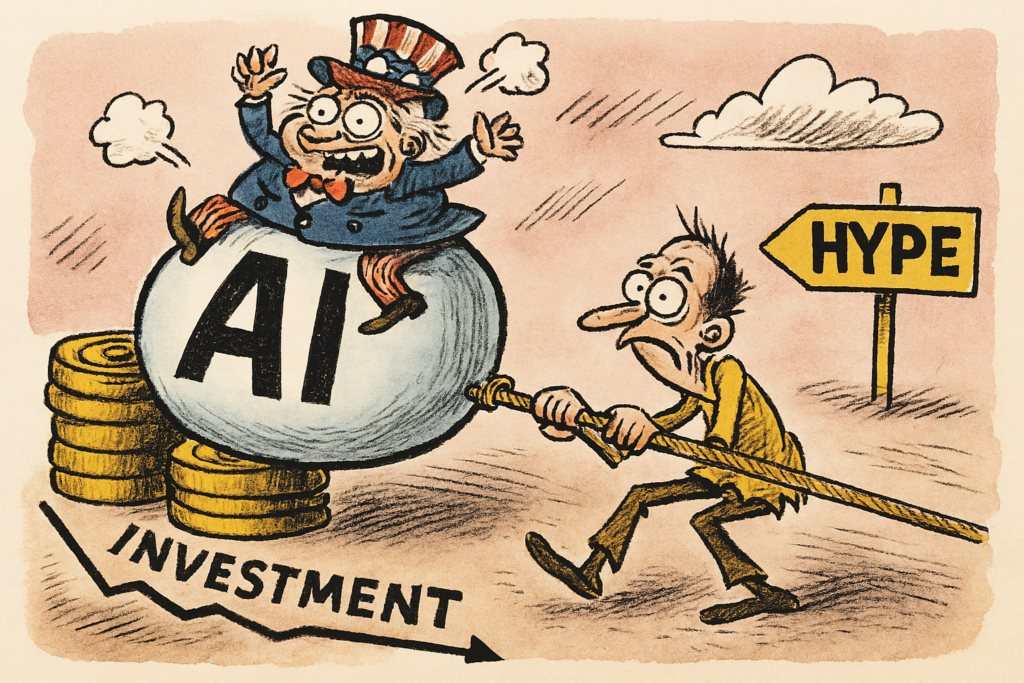
Indeed, some firms are already shifting focus from generative AI to more autonomous, productivity‑driven agentic models, which may offer clearer paths to return on investment.
Long-term potential vs short term hype
The truth likely lies between the extremes. AI has undoubtedly been over‑sold in the short term, with inflated expectations and rushed adoption leading to disappointing early results.
But the long‑term case remains strong. As tools mature, integration improves, and organisations learn to measure value beyond simple cost savings, returns may begin to justify the extraordinary capital outlay.
For now, the market is entering a more pragmatic phase—one where hype gives way to accountability, and where the winners will be those who invest not just heavily, but wisely.
Less expensive and simpler AI systems may arrive before these huge investments materialise a decent return.