

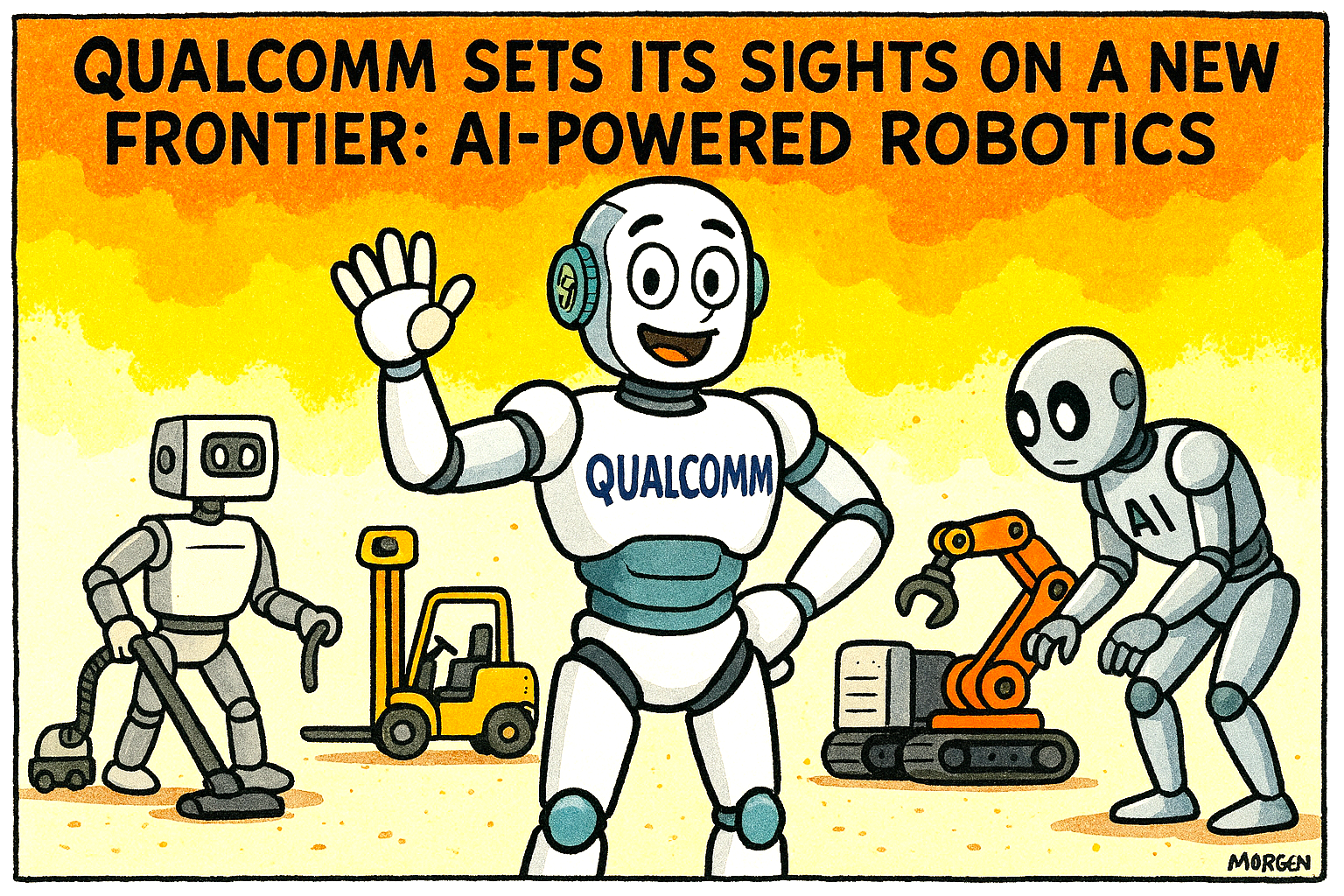
Qualcomm is accelerating its push into artificial intelligence and robotics, signalling a strategic shift that could redefine the company’s future beyond smartphones.
Executives now describe robotics as a core growth pillar, with chief executive Cristiano Amon reportedly forecasting that intelligent machines will become a “larger opportunity” for the business within the next two years.
Expanding from Mobile Chips to Physical AI
For decades, Qualcomm’s dominance has rested on its mobile processors, which power much of the global smartphone market.
The company is now repurposing that expertise for what it calls physical AI—robots capable of perceiving, reasoning, and acting autonomously in real‑world environments.
This transition reflects a broader industry trend: as generative AI matures, attention is shifting from digital assistants to embodied systems that can perform physical tasks.
Qualcomm’s new robotics architecture, unveiled recently, is designed as a full‑stack platform. It combines high‑efficiency system‑on‑chips, safety‑certified compute modules, and advanced on‑device AI models.
The aim is to give robot manufacturers a scalable foundation, whether they are building compact consumer devices or full‑size humanoids for industrial use.
Dragonwing Becomes the Flagship
At the centre of this strategy is the Dragonwing line of processors. The latest model, the Dragonwing IQ10, targets industrial automation and advanced humanoid robots.
It has reportedly been engineered to run complex AI models locally, reducing reliance on cloud connectivity and improving safety, responsiveness, and energy efficiency.
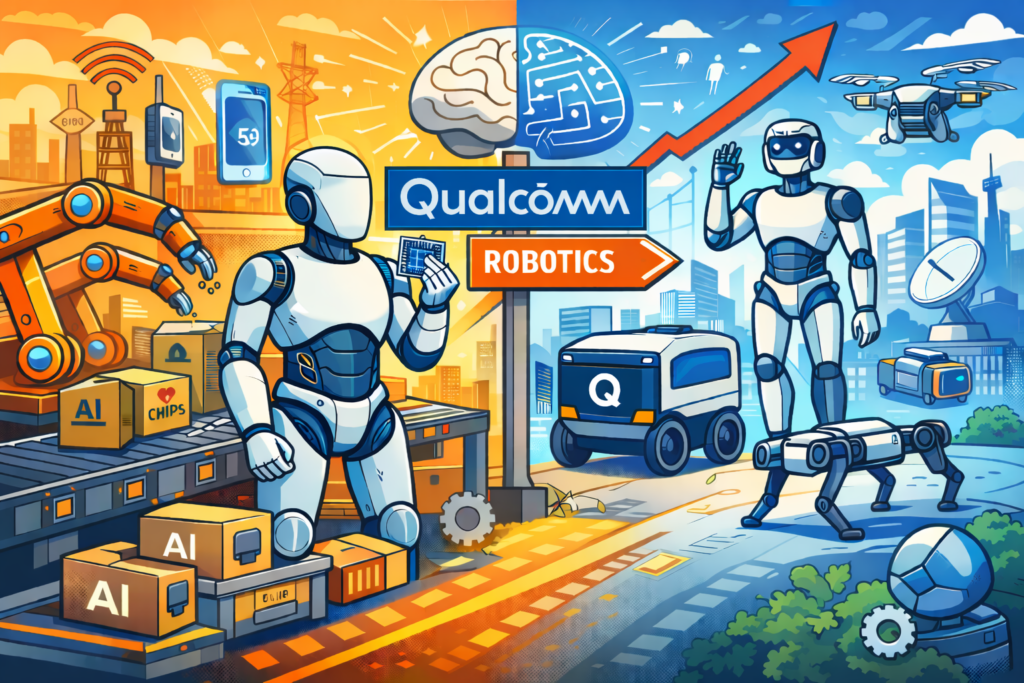
Qualcomm showcased these capabilities at recent industry events, where robots powered by Dragonwing chips demonstrated dexterity, mobility, and real‑time decision‑making.
The company’s ambition places it in direct competition with Nvidia, which currently dominates AI compute for robotics, and with a growing cohort of start‑ups building specialised hardware for autonomous machines.
Why Robotics Matters Now
Three factors underpin Qualcomm’s renewed focus
- Diversifying revenue as smartphone markets plateau and competition intensifies.
- Leveraging its edge‑AI strengths, particularly in low‑power, high‑performance chips suited to mobile robots.
- Rising industrial demand, with logistics, retail, and manufacturing sectors adopting automation at scale.
The robotics push also complements Qualcomm’s automotive and PC AI strategies, creating a broader ecosystem of connected, intelligent devices.
A Critical Two Years Ahead
Qualcomm’s challenge now is to convert impressive demonstrations into commercial deployments.
If successful, the company could become a foundational supplier for the emerging era of physical AI—an era in which robots move from novelty to necessity.