


China’s AI Tech Surge Puts Pressure on America’s AI Dominance

Robots line up for AI battle

For much of the modern AI era, the United States has held a clear advantage in frontier research, compute infrastructure, and commercial deployment.

Silicon Valley’s combination of elite talent, abundant capital, and world‑class semiconductor design created an environment where breakthroughs could scale at extraordinary speed.

Challenge

That dominance, however, is no longer uncontested. China’s accelerating push into advanced AI is reshaping the global technological landscape and posing the most credible challenge yet to America’s leadership.
China’s strategy is not built on a single breakthrough but on coordinated national effort. Beijing has spent years aligning universities, state‑backed funds, and private‑sector giants around a shared objective: achieving self‑sufficiency in critical technologies and becoming a global AI powerhouse.

Competitive

Companies such as Huawei, Baidu, Alibaba and Tencent are now producing increasingly competitive large models, while domestic chipmakers are narrowing the performance gap with U.S. suppliers despite export controls.

Crucially, China’s AI ecosystem benefits from scale and cost advantages that the U.S. cannot easily replicate.

Massive data availability, lower energy costs, and vertically integrated supply chains allow Chinese firms to train and deploy models at prices that appeal to developing economies.

For many countries, especially those already reliant on Chinese infrastructure, adopting a Chinese AI stack is becoming a pragmatic economic choice rather than a geopolitical statement.

Investment returns?

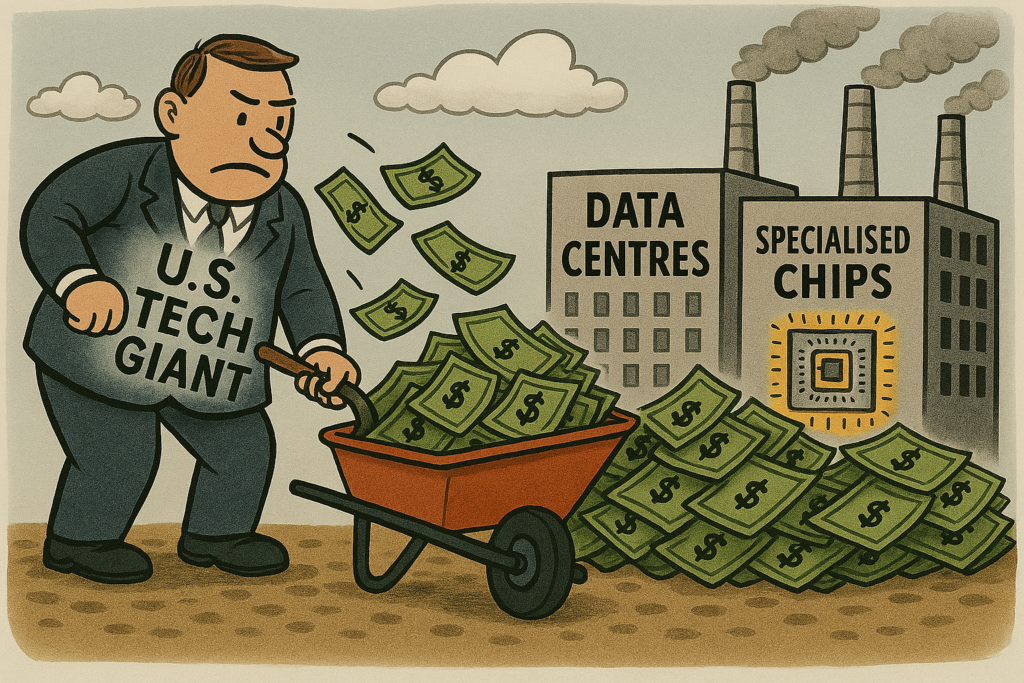
This shift is occurring just as U.S. tech giants embark on unprecedented spending cycles. Hyperscalers are pouring hundreds of billions of dollars into data centres, specialised chips, and model training.

The U.S. and its massive BIG Tech Spending Spree – Feeding the AI Habit

While this investment underscores America’s determination to stay ahead, it also raises questions about sustainability.

Investors are increasingly asking whether such vast capital expenditure can deliver long‑term returns in a world where China is offering cheaper, rapidly improving alternatives.

The emerging reality is not one of immediate American decline but of a genuinely multipolar AI landscape. The U.S. still leads in foundational research, top‑tier talent, and cutting‑edge semiconductor design.

Yet China’s rise represents a powerful economy that has mounted a serious challenge to the technological frontier.

The global AI race is no longer defined by a single centre of gravity. Instead, two competing ecosystems — one market‑driven, one reportedly state‑directed — are shaping the future of intelligent technology.

The outcome will influence not only economic power but the digital architecture of much of the world.
UK inflation’s latest fall sharpens focus on Bank of England rate cuts

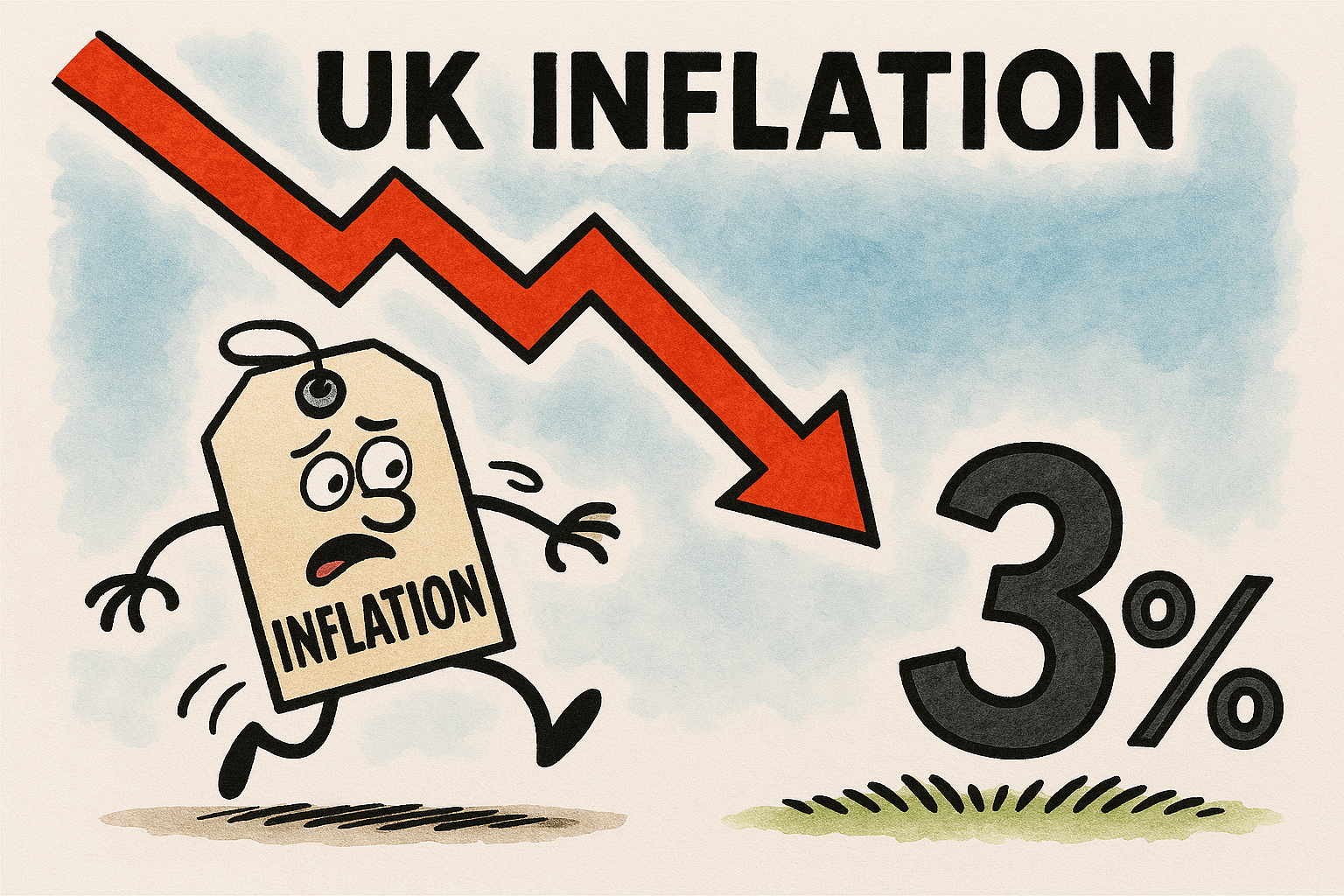
UK inflation at 3%

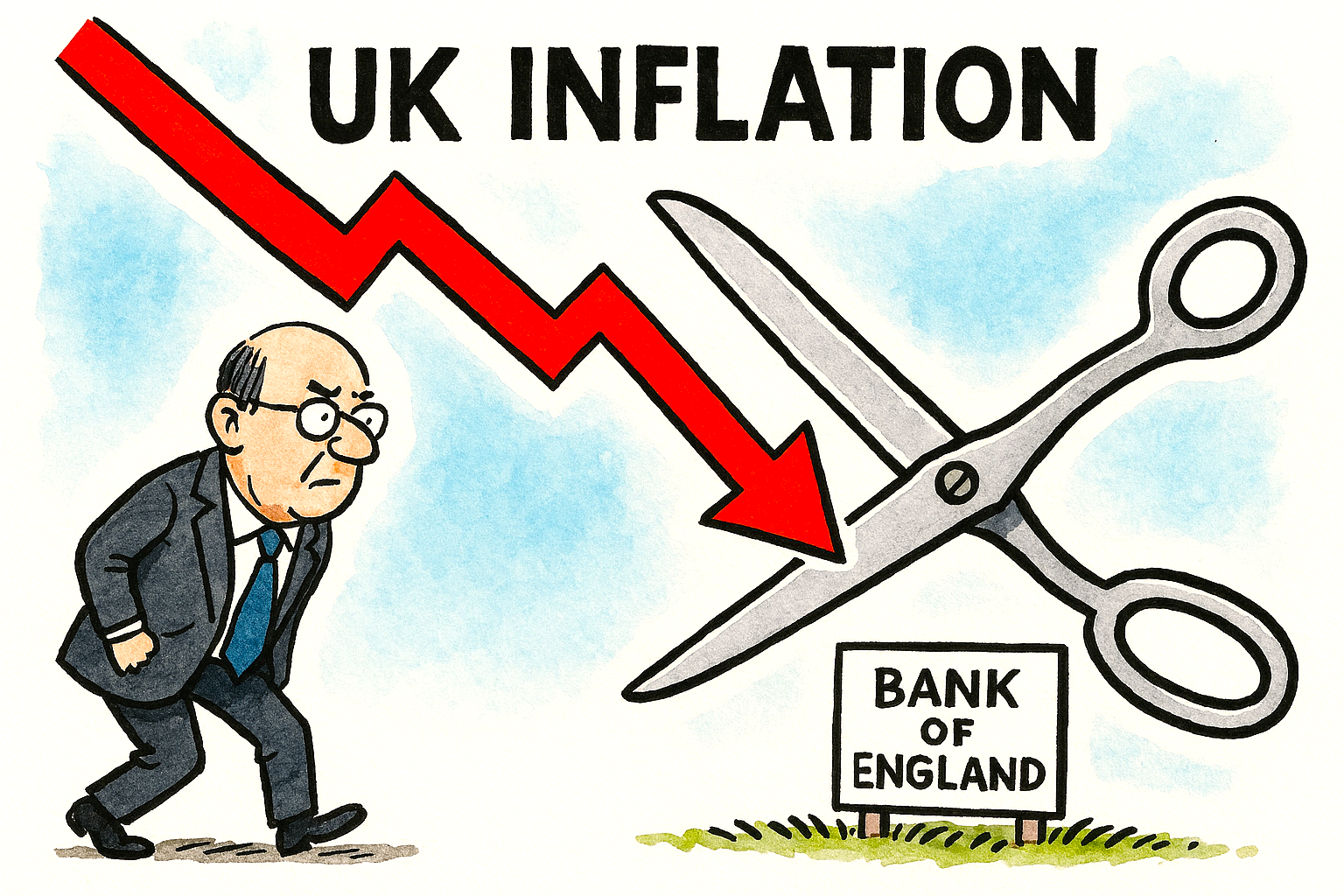
The UK’s inflation rate has dropped to 3%, its lowest level since March last year, renewing expectations that the Bank of England (BoE) may soon begin cutting interest rates.

The fall, recorded in January, marks a clear reversal from December’s unexpected uptick to 3.4% and reinforces the broader downward trend seen in late 2025.

Economists note that easing petrol, food, and airfare prices have been key contributors to the decline, helping inflation move closer to the government’s 2% target.

Bank of England easier decision

The BoE has held Bank Rate at 3.75% in recent meetings, emphasising the need for confidence that inflation will not only reach 2% but remain there sustainably.

However, with inflation now falling faster than previously forecast, policymakers appear to have greater room to consider loosening monetary policy later this spring.

The Bank itself has acknowledged that inflation is likely to return to target ‘a bit quicker than previously forecast’, suggesting scope for cuts if economic conditions evolve as expected.

Rate reduction likely in March or April 2026

Market analysts increasingly anticipate a rate reduction as early as March or April, particularly as wage growth cools and unemployment edges higher—factors that reduce domestic inflationary pressure.

For households and businesses, a cut would offer welcome relief after two years of elevated borrowing costs, potentially lowering mortgage rates and improving credit conditions.

While the BoE remains cautious, the latest inflation figures strengthen the case for a shift towards easing—signalling that the long, difficult climb down from the inflation peak may finally be nearing its conclusion.

As expected

Most economists and market analysts expected UK inflation to fall back to around 3% in the January release, down from 3.4% in December 2025.

UK inflation falls to 3%

This means the actual figure—3%—came in exactly in line with forecasts, rather than surprising to the downside or upside.

That alignment matters for the Bank of England because it reinforces the sense that inflation is easing broadly as expected, rather than stalling or re‑accelerating.

Employment data

Alongside falling inflation, the Bank of England is closely watching UK labour market data, which remains a key factor in its interest rate decisions.

Recent figures show wage growth is easing, with average earnings excluding bonuses rising at a slower pace—now below 6%—while job vacancies continue to decline.

This softening suggests that domestic inflationary pressure from pay settlements may be waning, giving the Bank more confidence that inflation can return to target sustainably.

However, unemployment remains low, and services inflation is still sticky, meaning policymakers are likely to weigh jobs data carefully before committing to rate cuts.

If wage growth continues to moderate and employment weakens further, the case for easing monetary policy will strengthen.

Office for National Statistics