
Gold – how high can you go?

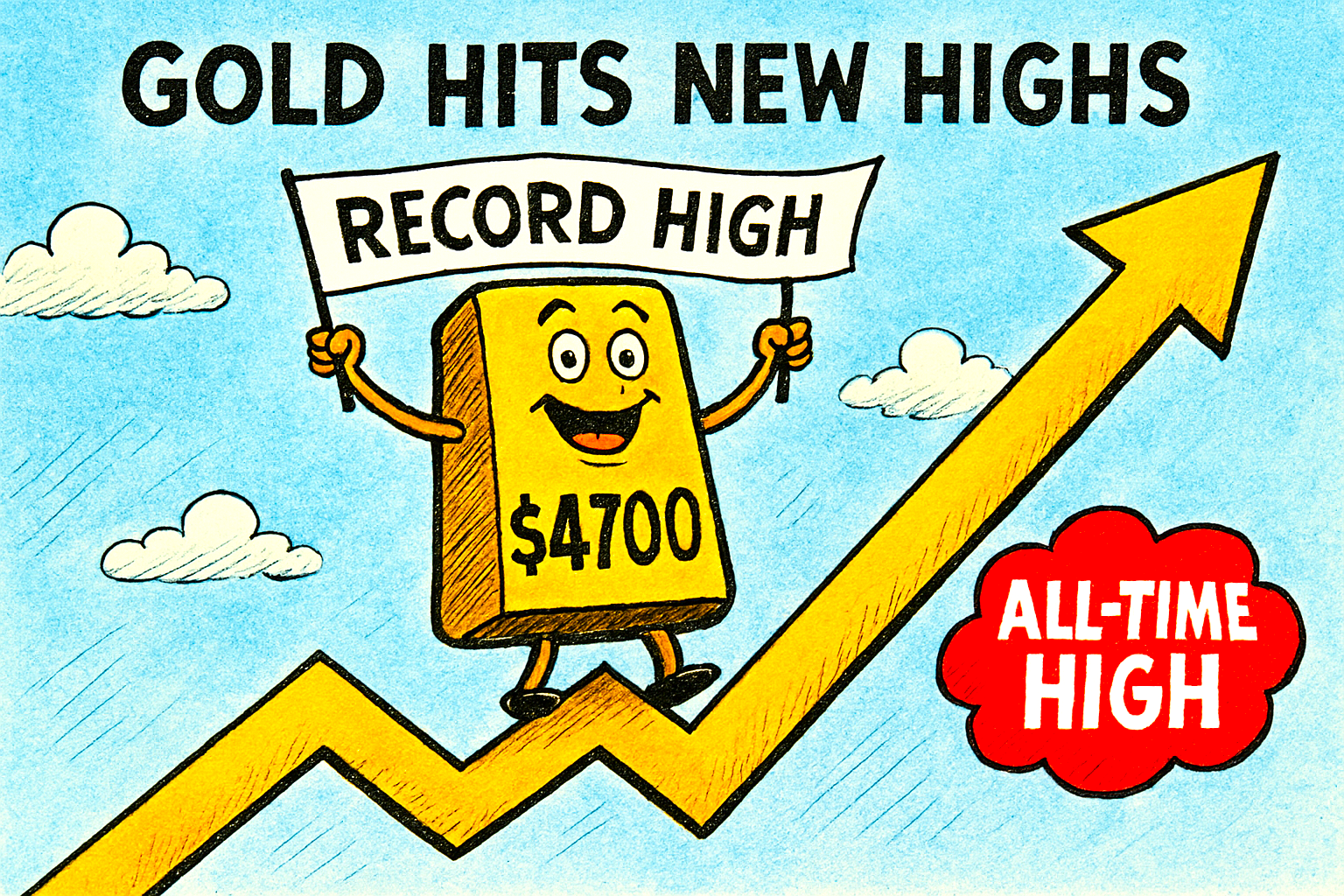
Gold high!

Gold has surged to unprecedented levels, cementing its status as the world’s most sought‑after safe‑haven asset.

In recent sessions, the precious metal has climbed to record highs, with international prices above $4,700 per ounce.

Milestone

This historic milestone reflects a potent mix of geopolitical tension, shifting monetary expectations, and renewed investor appetite for stability.

A major catalyst behind the rally has been escalating trade friction, particularly following new tariff threats from the United States aimed at several European nations.

These developments have intensified global uncertainty, prompting investors to move capital into assets traditionally viewed as resilient during periods of instability.

At the same time, signs of softer U.S. inflation and expectations of future interest‑rate cuts have further supported gold’s upward momentum by weakening the dollar and lowering the opportunity cost of holding non‑yielding assets.

Surge

The gold surge is not limited to global markets. Futures on major exchanges, including India’s MCX, have also registered all‑time highs, underscoring the worldwide scale of the rally.

Analysts suggest that if current conditions persist, gold could continue its ascent, with some forecasting the possibility of the metal reaching $5,000 per ounce in the coming months.

For now, gold’s latest peak marks a defining moment in financial history—an emphatic reminder of its enduring role as a store of value in turbulent times.
AI bubble – is it going to burst or just deflate very very slowly?

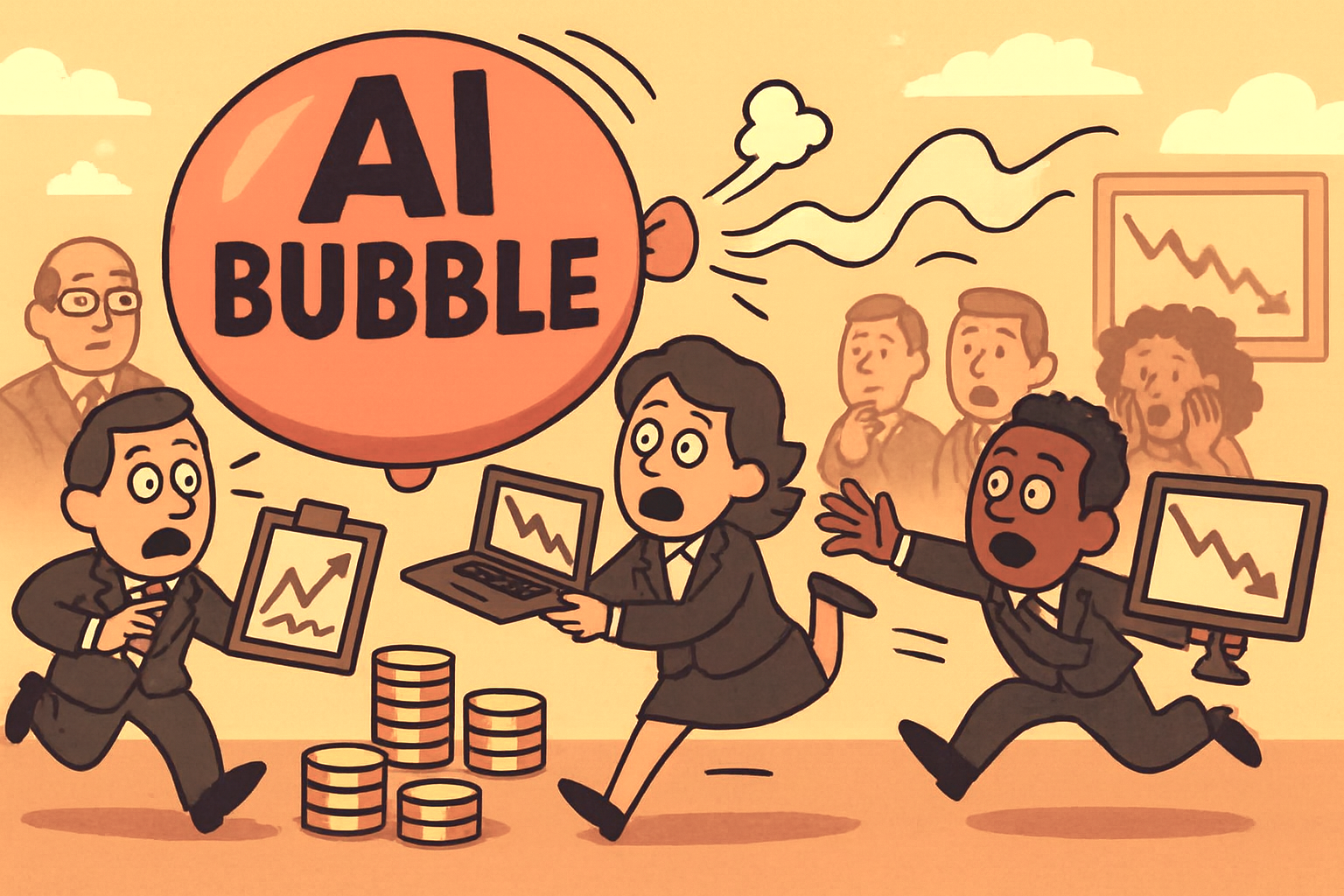
AI Bubble?

Either way, the balloon is close to popping!

AI‑linked markets are undeniably stretched, and the debate over whether a correction is imminent has intensified.

Several analysts warn that valuations across AI‑heavy indices now resemble late‑cycle excess, with the Bank of England noting that some multiples are approaching levels last seen at the peak of the dot‑com bubble.

At the same time, experts argue that enthusiasm for AI stocks has pushed prices far beyond what current earnings can justify, raising the risk of a sharp pullback if sentiment turns or growth expectations soften.

AI reckoning

A number of commentators even outline scenarios for a broader ‘AI reckoning’, where inflated expectations collide with the slower, more incremental reality of enterprise adoption.

This doesn’t guarantee a crash, but it does suggest that the market is vulnerable to any disappointment in revenue growth, chip demand, or data‑centre utilisation.

However, not all analysts believe a dramatic collapse is inevitable. Some argue that while valuations are undeniably high, the scale of investment may still be justified by long‑term structural demand for compute, automation, and agentic AI systems.

Survey

A recent survey of 40 industry leaders shows a split: many fear a bubble, but others maintain that heavy capital expenditure is necessary to meet future AI workloads and that the sector could experience a period of deflation or consolidation rather than a full‑scale crash.

A more moderate scenario—favoured by several economists—is a multi‑quarter pullback as markets digest rapid gains, capital costs normalise, and companies shift from hype‑driven spending to proving real returns.

In this view, AI’s long‑term trajectory remains intact, but the near‑term path is likely to be bumpier and more disciplined than the exuberance of the past two years.

Are we in an AI bubble? Here is my conclusion

The latest commentary suggests we’re still in a highly speculative phase of the AI boom, with massive infrastructure spending and concentrated market gains creating bubble‑like conditions.

So, the safest summary is this: valuations are stretched, expectations are overheated, and investment is flowing faster than proven revenue.

Yet unlike past bubbles the underlying technology is delivering real adoption and measurable productivity gains, meaning we may be in an overhyped surge rather than a classic doomed bubble.

A deflation effect of some sort is likely and soon.

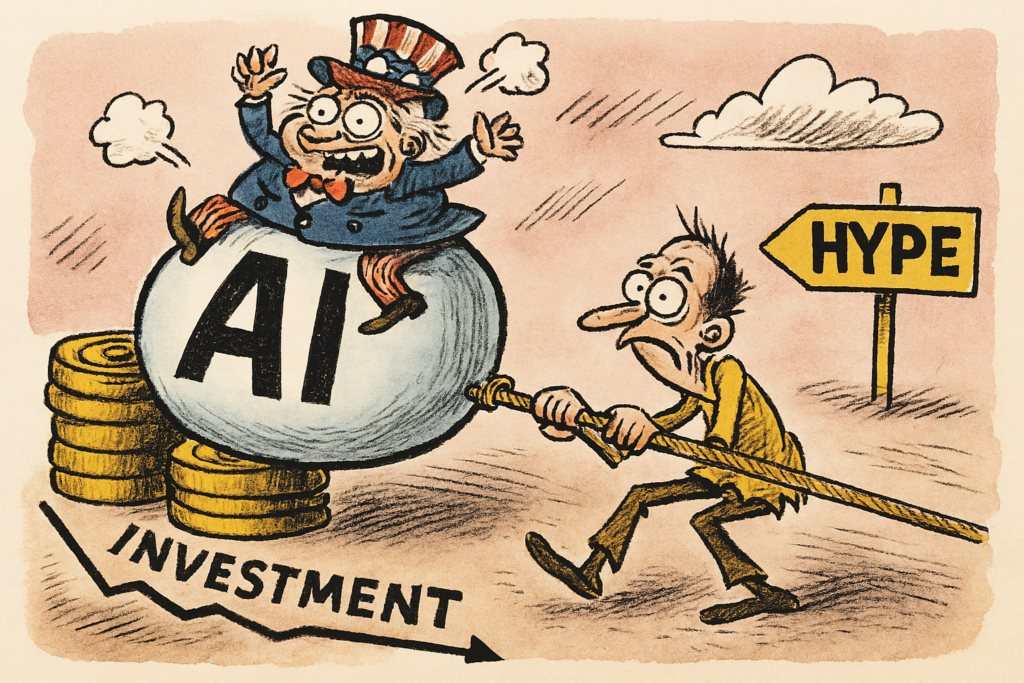
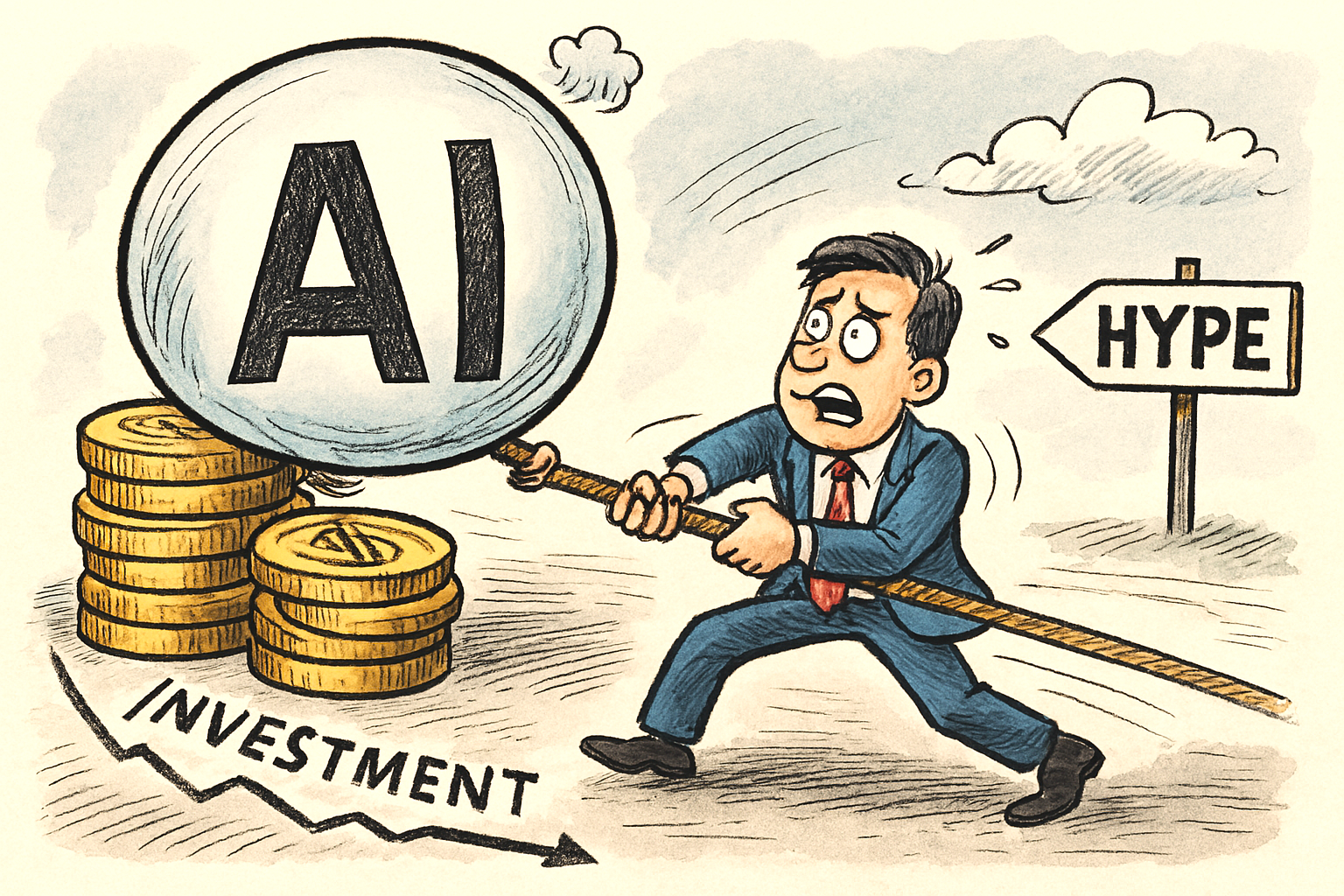
Has AI Investment Gone Too Far Too Fast? A Quick Look at Hype Reality and Returns

Bubble and turmoil

Few technologies have attracted capital as aggressively as artificial intelligence. In just a few years, AI has shifted from a promising research frontier to the centrepiece of global corporate strategy.

Yet as investment has surged, so too has scepticism. Many analysts now argue that the pace of spending has outstripped both practical readiness and measurable returns.

Recent research suggests that the era of uncritical AI enthusiasm is giving way to a more sober assessment.

Implementation

Capgemini’s findings indicate that businesses are moving from experimentation to implementation, but they also reveal that firms are increasingly focused on proving real value rather than chasing novelty.

This shift reflects a broader concern: despite tens of billions poured into generative AI, a striking proportion of organisations report no financial return at all.

Some studies suggest that as many as 95% of generative AI investments have yet to produce measurable gains.

This disconnect between investment and outcome has fuelled claims that AI has been over‑hyped. The comparison to the telecom‑fibre boom of the early 2000s is becoming more common, particularly as much of the AI infrastructure build‑out is debt‑funded.

Transformative

The risk is not that AI lacks long‑term utility—few doubt its transformative potential—but that the current wave of spending is misaligned with operational readiness, data quality, and realistic deployment timelines.

At the same time, it would be simplistic to declare the AI boom a bubble destined to burst. Many leaders argue that the scale of investment is necessary to meet future demand for data centres, chips, and agentic AI systems.

Indeed, some firms are already shifting focus from generative AI to more autonomous, productivity‑driven agentic models, which may offer clearer paths to return on investment.

Long-term potential vs short term hype

The truth likely lies between the extremes. AI has undoubtedly been over‑sold in the short term, with inflated expectations and rushed adoption leading to disappointing early results.

But the long‑term case remains strong. As tools mature, integration improves, and organisations learn to measure value beyond simple cost savings, returns may begin to justify the extraordinary capital outlay.

For now, the market is entering a more pragmatic phase—one where hype gives way to accountability, and where the winners will be those who invest not just heavily, but wisely.

Less expensive and simpler AI systems may arrive before these huge investments materialise a decent return.