The ups and downs of Gold and Silver as prices collapse from record highs

Gold and silver - the ups and downs!

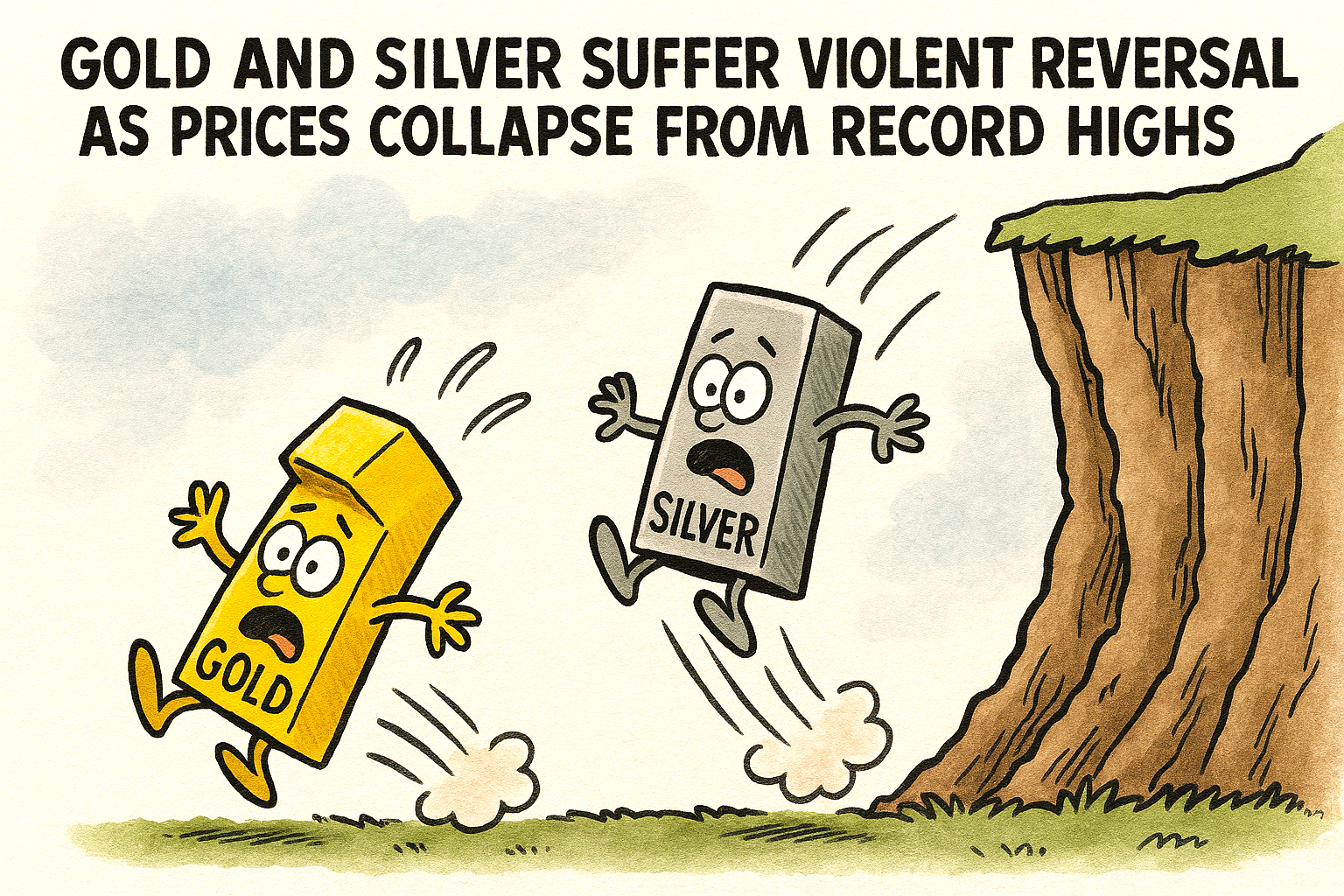
The precious metals market has endured one of its most dramatic reversals in modern trading history, with gold and silver plunging from last week’s extraordinary peaks to deep intraday lows.

Gold, which surged to an unprecedented $5,600 per ounce, fell back to around $4,500, while silver has retreated from highs near $120 per ounce to roughly $74 in intraday trading.

The scale and speed of the correction have rattled traders and forced a reassessment of what drove the rally — and what comes next.

Why the collapse happened

The initial surge in both metals was fuelled by a potent mix of safe‑haven demand, speculation, and expectations of looser U.S. monetary policy and new Federal Reserve chair.

As gold broke above $4,500 for the first time in late December, speculative interest intensified, pushing prices into what now looks like a classic blow‑off top.

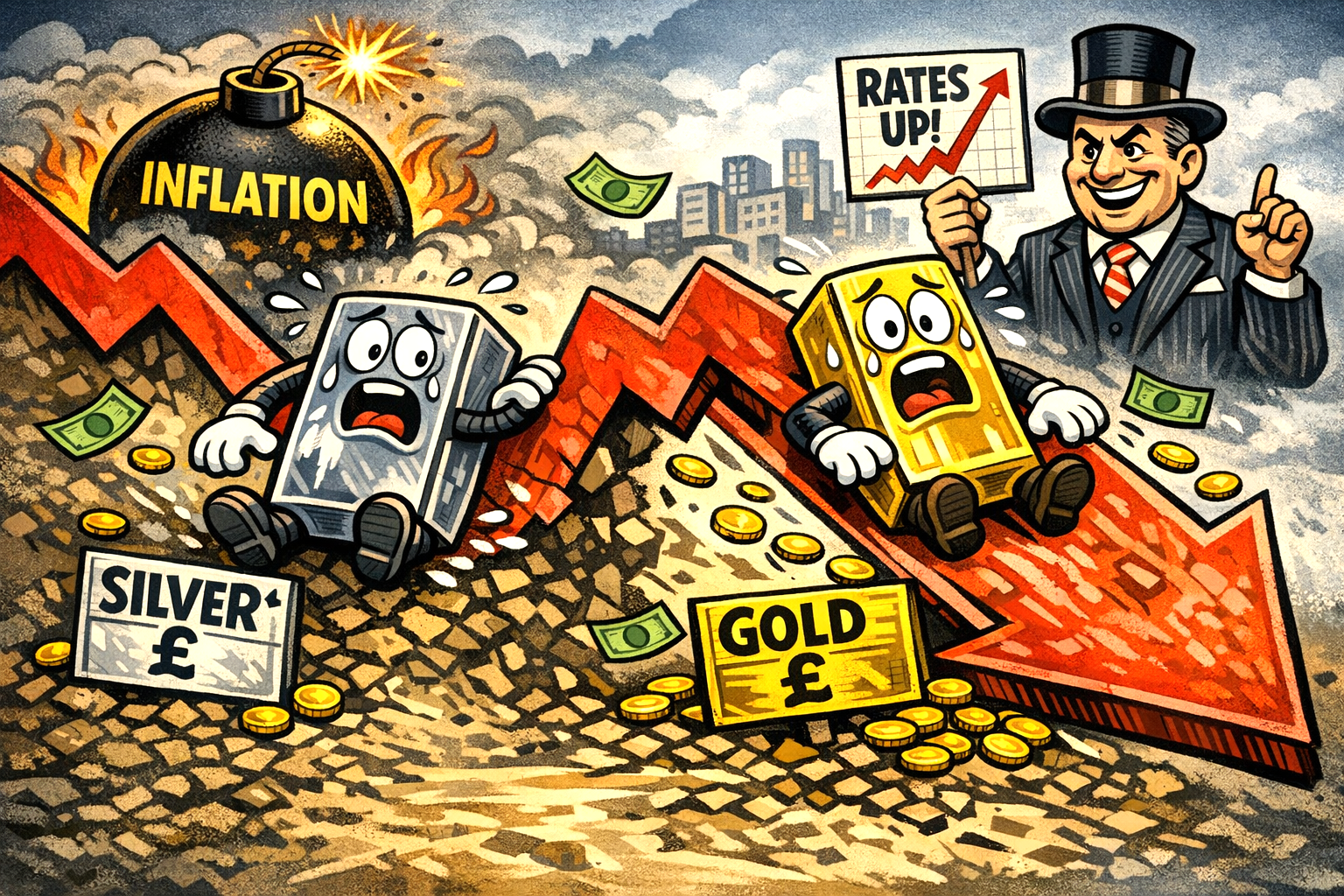
But the reversal began when sentiment shifted abruptly. A stronger U.S. dollar, firmer Treasury yields, and a wave of profit‑taking created the first cracks.

Once prices started to slip, leveraged positions in futures markets were forced to unwind. This triggered cascading sell orders, accelerating the decline.

Silver, which had risen even more aggressively than gold, suffered one of its steepest percentage drops since 1980.

How the sell‑off unfolded

The correction was not a slow bleed but a violent, liquidity‑draining plunge. Gold fell more than $1,000 per ounce from peak to trough, while silver shed $40–$45.

These moves were amplified by algorithmic trading systems that flipped from buying momentum to selling weakness as volatility spiked.

The fact that gold briefly and recently traded below $4,800 and silver below $100 before extending losses to their intraday lows shows how thin market depth became during the heaviest selling.

Even long‑term holders, typically slow to react, contributed to the pressure as stop‑loss levels were triggered.

What happens next

Despite the severity of the drop, the fundamental drivers that supported the earlier rally have not disappeared.

Concerns over global debt levels, geopolitical instability, and central bank diversification into gold remain intact. However, the market must now digest the excesses of the speculative surge.

In the short term, volatility is likely to remain elevated. A stabilisation phase — potentially lasting weeks — may be needed before a clearer trend emerges.

If the dollar strengthens further or yields continue rising, metals could retest their recent lows. Conversely, any signs of economic softening or renewed policy easing could attract dip‑buyers back into the market.

For now, the message is clear: even in a bull market, precious metals can still deliver brutal corrections — and timing remains everything.

Note: Friday to Monday (30th January to 2nd February 2026)

And… watch for the rebound.

Silver skyrockets to new record high!

Silver hits record high

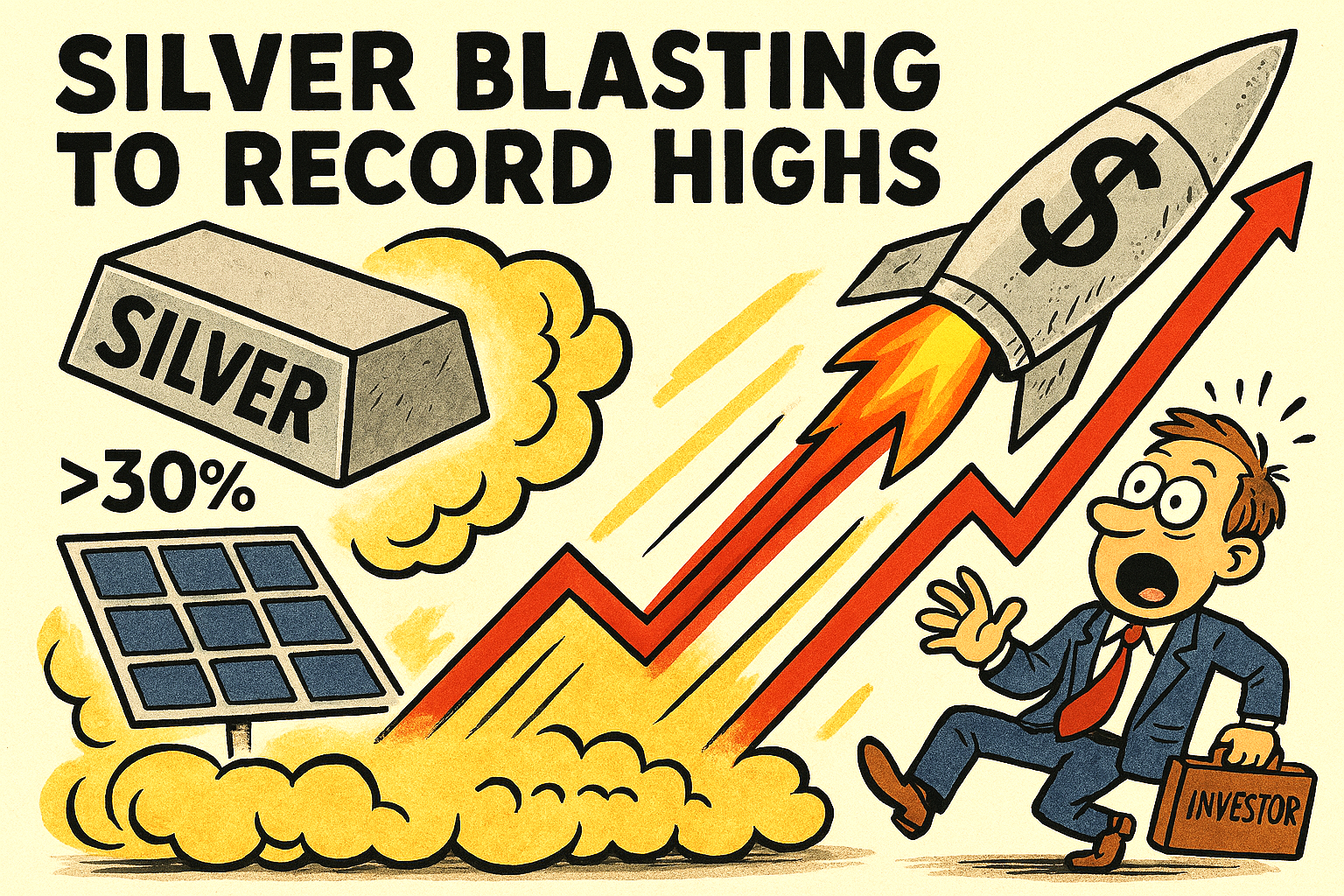
Silver has surged with remarkable force, blasting to fresh record highs and reshaping market sentiment in the process.

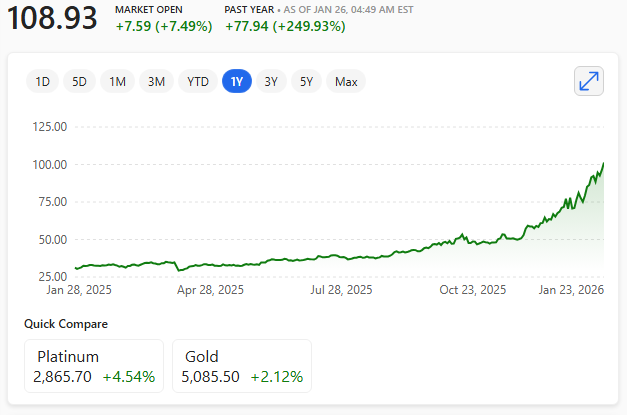
Recent trading sessions have seen prices vault past previous milestones, climbing above $108 per ounce and even approaching the $109 mark as safe‑haven demand intensifies amid global uncertainty.

This dramatic meteoric ascent follows weeks of accelerating momentum, with technical indicators showing a firmly bullish structure and widening gaps between key moving averages.

Analysts note that silver’s rally has outpaced many other commodities, fuelled by its dual role as both a precious metal and an essential industrial input.

Silver one-year chart 26th January 2026

Industrial sectors—from photovoltaics to electric vehicles—are feeling the pressure as soaring prices push material costs sharply higher.

In some cases, silver now represents more than 30% of total solar module expenses, underscoring the far‑reaching impact of this surge.

With supply constraints tightening and investor appetite growing, silver’s explosive rise shows little sign of slowing down.

Do falling commodity prices indicate there is trouble brewing with the U.S. economy?

Commodities

Falling commodity prices can be a signal of economic trouble ahead

When commodity prices drop, it often reflects a decrease in demand for raw materials, which can be a sign of slowing economic activity. For instance, the recent decline in copper prices is seen as a potential indicator of economic slowdown.

Sugar, cotton, soybean, oil and iron ore are some examples where demand has fallen during this year.

However, it’s important to consider other factors as well. The global economic slowdown has reduced demand for energy, minerals, and agricultural products. While this trend is evident in many countries, the U.S. economy has shown some resilience.

So, while falling commodity prices can be a warning sign, they are just one piece of the puzzle. It’s essential to look at a broader range of economic indicators to get a complete picture.

Commodity price charts as of: 13th August 2024

Copper one year chart

Iron ore one year chart

Cotton price one year chart

Sugar one year price chart

Soybeans one year price chart

U.S. oil one year price chart

Does the recent precious metal rally in gold, silver and platinum have further to go? Some analysts think so

Precious metal rally

Precious metal prices received a significant uplift on Thursday 16th May 2024 following the release of better-than-expected U.S. inflation data, which increased the likelihood of rate cuts by the Federal Reserve, again.

Gold prices reached their highest point in over three weeks on Thursday too, while silver achieved its highest price in over three years, and platinum ascended to a peak close to its one-year high.

According to strategists in a recent comment, gold prices might soon approach the $2,400 again, silver could rise to as much as $30 per ounce, and platinum has the potential to hit $1,130 per ounce.

Silver price per ounce 16th May 2024 – chart snapshot

Gold price per ounce 17th May 2024 – chart snapshot