

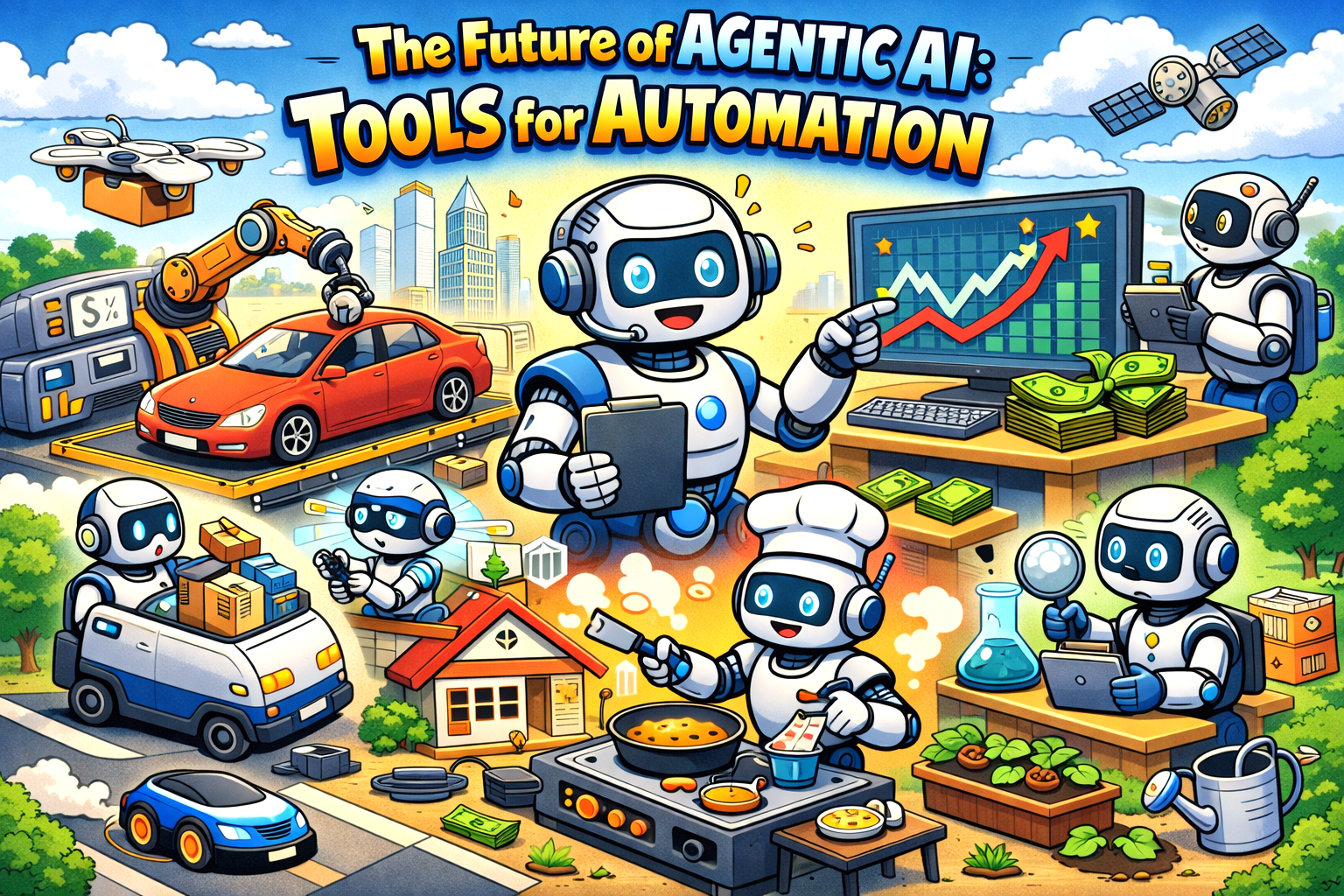
Agentic AI is rapidly shifting from a speculative idea to a practical force reshaping how work gets done.
Unlike traditional AI systems, which wait passively for instructions, agentic AI can plan, act, and adapt within defined boundaries.
It is not simply a smarter chatbot; it is a system capable of taking initiative, coordinating tasks, and pursuing goals on behalf of its user.
This evolution marks a profound turning point in how we think about automation, creativity, and human–machine collaboration.
Agentic AI colleagues
The first major change is the move from reaction to autonomy. Today’s AI assistants excel at answering questions or generating content, but they still rely on constant prompting.
Agentic AI, by contrast, can break down a complex objective into smaller steps, choose the best tools for each stage, and execute them with minimal oversight. This transforms AI from a passive helper into an active collaborator.
For individuals and small teams, it promises a level of operational leverage previously reserved for large organisations with dedicated staff.
A second shift lies in the emergence of multi‑modal competence. Agentic systems will not be confined to text. They will navigate interfaces, analyse documents, draft communications, and even orchestrate workflows across multiple platforms.
In effect, they will behave more like digital colleagues—capable of understanding context, maintaining continuity, and adapting to changing priorities. The result is a new category of labour: cognitive automation that complements rather than replaces human judgement.
However, the rise of agentic AI also raises important questions. Autonomy introduces risk. If an AI can take action, it must do so safely, transparently, and within clear constraints.
On guard
Guardrails will be essential—not only technical safeguards, but also cultural norms around delegation, accountability, and trust. The future will require a balance between empowering AI to act and ensuring humans remain firmly in control of outcomes.
Another challenge is the shifting nature of expertise. As agentic AI handles more administrative and procedural work, human value will increasingly lie in strategic thinking, creativity, and ethical decision‑making.
This is not a loss but a rebalancing. Freed from routine tasks, people can focus on higher‑order work that genuinely benefits from human insight.
The organisations that thrive will be those that treat AI not as a shortcut, but as a catalyst for deeper, more meaningful contribution.
Future use of agents
Looking ahead, the most exciting aspect of agentic AI is its potential to democratise capability. A single individual could run a publication, a business, or a research project with the operational efficiency of a small team.
Barriers to entry will fall. Innovation will accelerate. And the line between “solo creator” and “organisation” will blur.
Agentic AI is not the end of human agency; it is an extension of it. The future belongs to those who learn to work with these systems—setting direction, providing judgement, and letting AI handle some of the heavy lifting.
Far from replacing us, agentic AI may finally give us the space to think, create, and lead with clarity.