China’s Humanoid Robots: From Viral Stumbles to Synchronised Spectacle

Humanoid robots gaining abilities

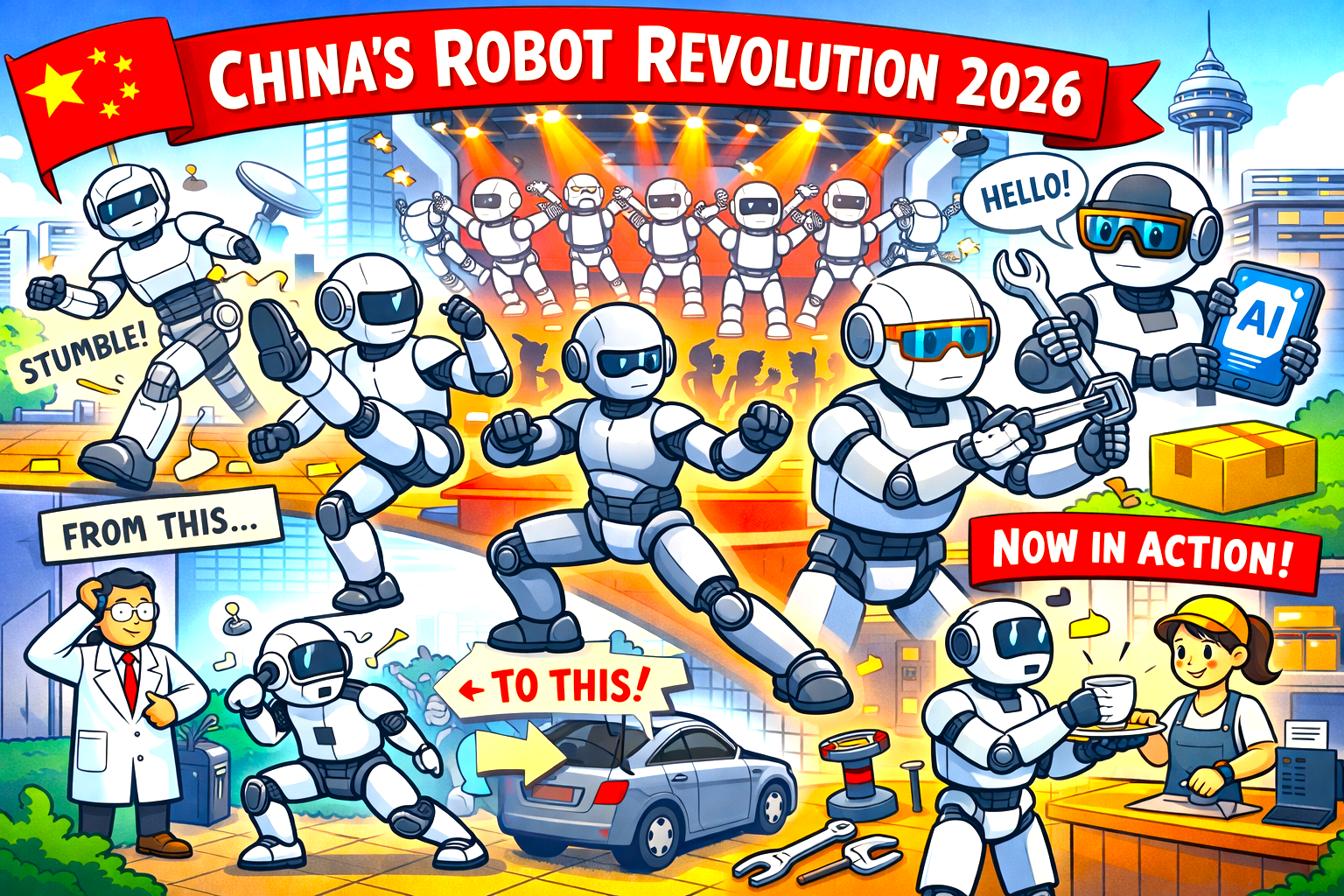
China’s humanoid robotics sector has undergone a startling transformation over the past year, shifting from online punchline to global headline.

At the 2026 Spring Festival Gala — the world’s most‑watched television broadcast — a troupe of Chinese-built humanoids delivered a polished sequence of kung fu routines. These were synchronised with dancing skills and acrobatic flips.

A performance that sharply contrasted with their awkward public outings just twelve months earlier.

From failure to back flips – in one year

In early 2025, China’s humanoids were better known for wobbling through folk dances and collapsing mid‑marathon.

Clips of stumbles and system failures circulated widely, fuelling scepticism about whether the country’s robotics ambitions were more hype than substance.

Yet the past year has seen a rapid tightening of engineering, manufacturing and AI integration — and the results are now impossible to ignore.

Analysts note that China’s advantage is structural as much as technical. The country controls a nearly vertically integrated robotics supply chain, from rare earths and high‑performance magnets to batteries and actuators.

Unitree scales up

This ecosystem has enabled companies such as Unitree to scale production at a pace Western rivals struggle to match, while keeping prices dramatically lower.

Unitree’s G1 humanoid, for example, carries a base price of around $13,500, far below the expected near‑term pricing of Tesla’s Optimus platform.
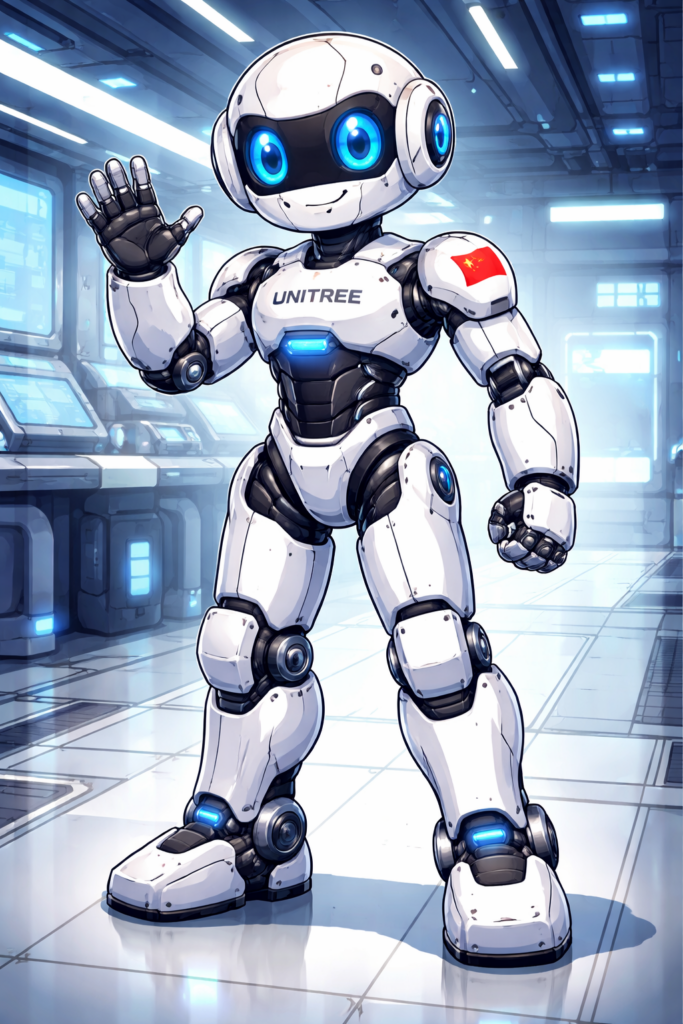
The Gala performance reportedly showcased more than choreography. The robots demonstrated improved dexterity, balance and tool‑handling — capabilities that hint at real industrial potential.

Analysts argue that flips and weapon routines are impressive, but the true economic value lies in tasks requiring fine motor control, endurance and the ability to chain multiple actions together.

These are the areas where humanoids could eventually reshape logistics, manufacturing and even frontline service roles.

Hurdles remain

Still, significant hurdles remain. Reliability in messy, human‑centred environments is far from solved, and the underlying AI models — the systems that allow robots to reason, adapt and plan — remain the decisive battleground.

As one analyst reportedly put it, the robot ‘will only be as useful as its model’, a reminder that physical prowess alone won’t deliver the productivity revolution China hopes for.

Even so, the past year marks a turning point. What was once a source of online mockery has become a showcase of national ambition.

If China maintains its current momentum, the global robotics race may be entering a new, more competitive phase — and this time, the world is paying attention.

Top Chinese Humanoid Robots and What They Do

China’s humanoid robotics industry has exploded in scale and ambition, with hundreds of domestic models now in development or deployment — many designed for real-world tasks, research and emerging commercial use.

1. Unitree Robotics – G1 and H2
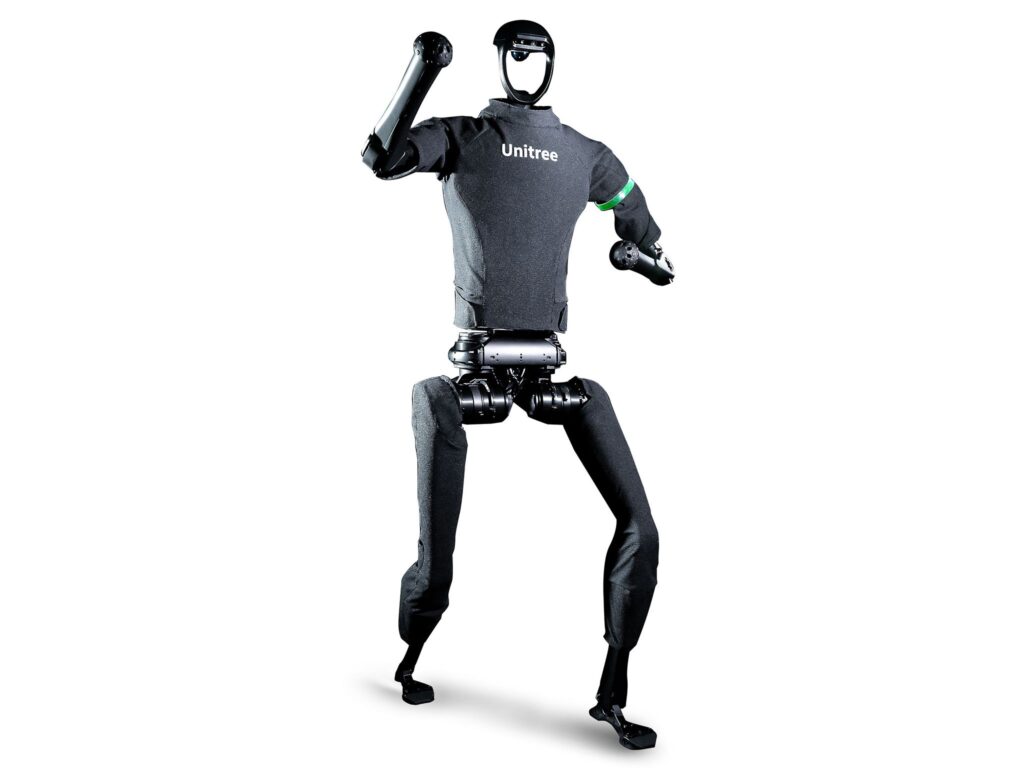
These are among China’s most visible humanoids.

The Unitree G1 is built for agility and athletic performance and was featured in high-profile public displays.

Its advanced motors, balance systems and AI control allow dynamic motion — from kung fu to flips — making it a popular research and entertainment platform.


Use: demonstrations, research, potential service and logistics applications
Production goals: Unitree aims to ship up to 20,000 robots in 2026, a dramatic increase from 5,500 in 2025.

2. AgiBot Series

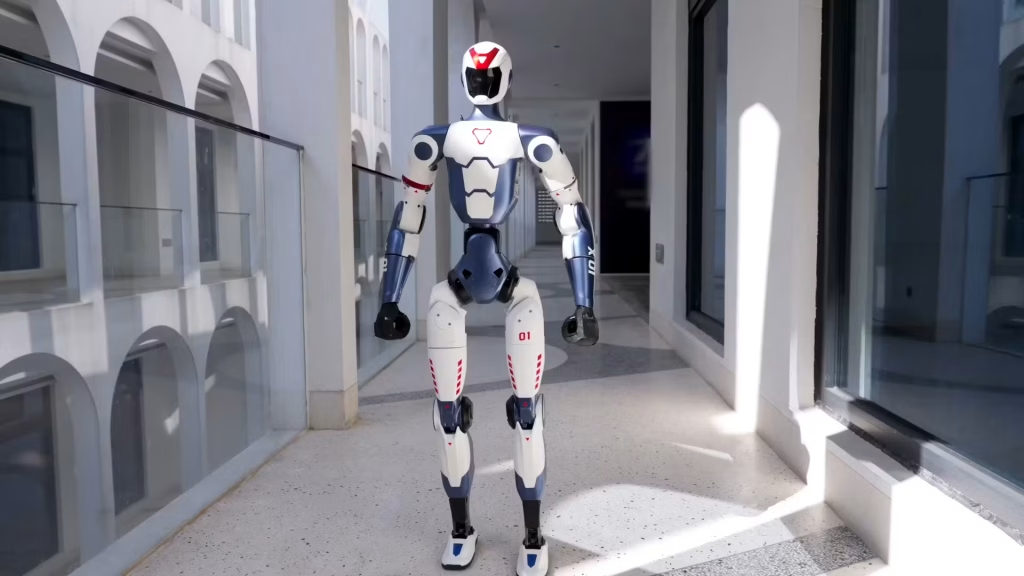
AgiBot has several humanoid designs oriented toward industrial and laboratory tasks, such as vehicle inspections or precision work, using RGB-D cameras and lidar sensors.


RAISE A1 — tall, capable of 7 km/h walking and heavy lifting
Yuanzheng A2 — bipedal, sensor-driven for fine manipulation
Lingxi X1 — open-source design to support wider development
3. Diverse 2026 Models Across Industries

China’s ecosystem now includes many specialised humanoids, each targeting different sectors:


Dr02 (DEEP Robotics) – industrial-grade, all-weather use
L7 (Robot Era) – versatile and modular for logistics/research
Walker S2 (UBTECH) – continuous operation on factory floors
Forerunner K2 (Kepler Robotics) – precision tasks with advanced sensors
XMAN-R1 (Keenon Robotics) – service automation and collaborative work
Stardust Smart S1 (Astribot) – agile and adaptable for commercial interaction

Each of these models shows how far Chinese makers have moved past basic balance and walking, toward real manipulation and decision-making.

Capabilities: From Tools to Interaction

Modern Chinese humanoids are increasingly about practical capability, not just spectacle:

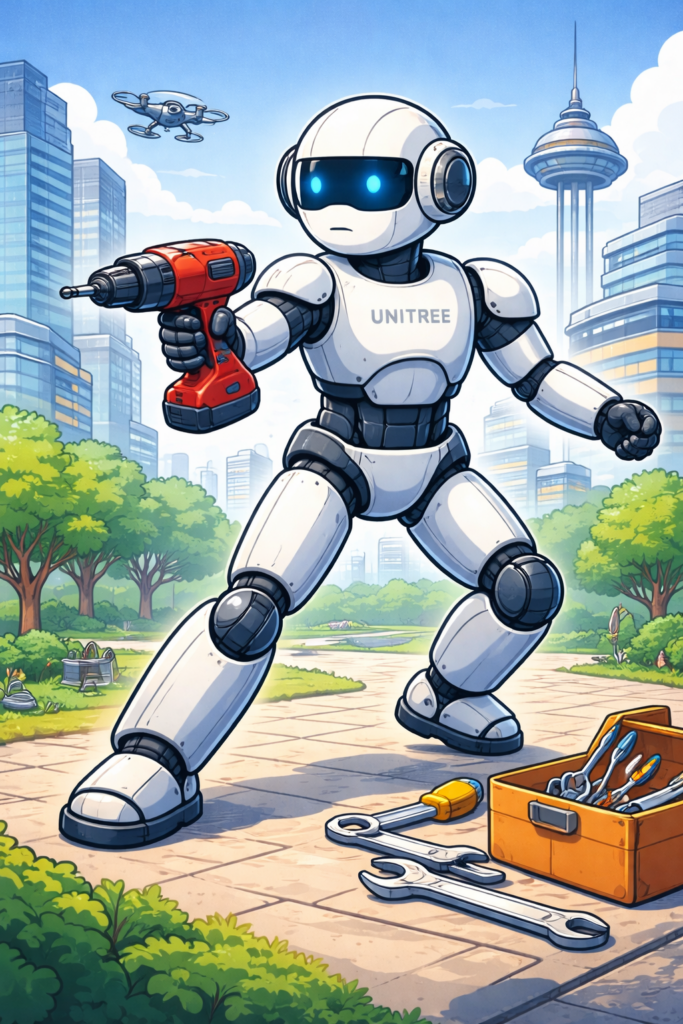
Tool handling
Research and industrial models are designed to grip, carry and operate tools, approaching tasks like part assembly or quality checks in controlled environments.
Sensor integration
Latest designs combine lidar, cameras, IMUs and advanced control software — giving robots robust perception for navigation and object manipulation.

AI and language interaction
Efforts are underway to combine large language models with robot control systems — enabling natural language instructions and more flexible task execution.

Who’s Using Them?

While many humanoids remain in research or industrial contexts today, interest is rising rapidly:
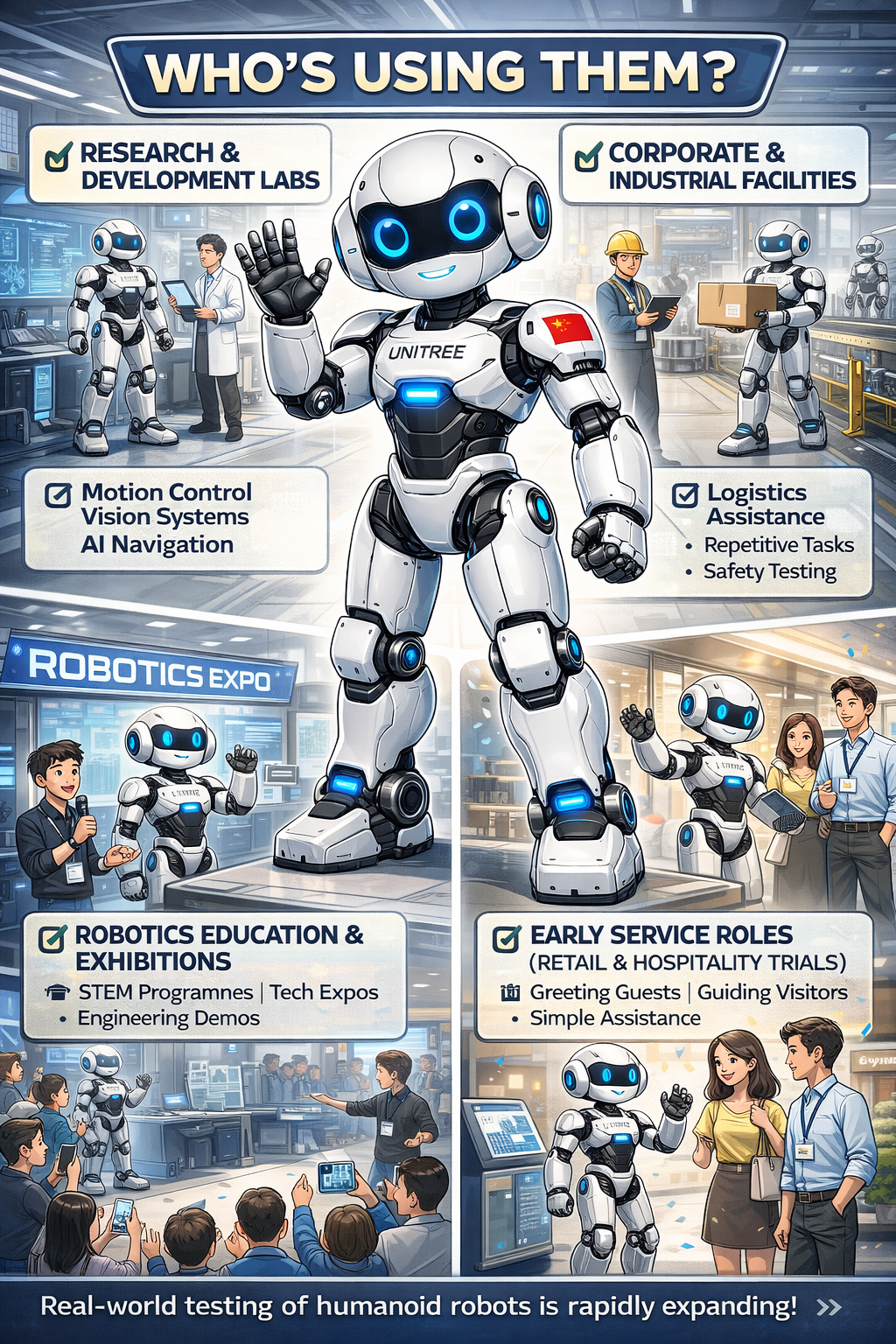
✔️ Research and development labs
✔️ Corporate facilities (testing automation)
✔️ Robotics education and exhibitions
✔️ Early service roles in retail and hospitality

Consumer demand in China has surged since high-visibility events like the Spring Festival Gala, and delivery dates for popular models are being pushed out due to pre-orders.

China’s humanoid robot landscape in 2026 spans high-performance showpieces, industrial task specialists and service-ready platforms.

With thousands of units shipped and ambitious production plans underway, the country is rapidly evolving from prototype demonstrations to tangible real-world deployment.

Is Apple planning to build an AI robot?

Robotics

Reports indicate that Apple is delving into AI-powered robotics, aiming to innovate within the home robotics sector. A Bloomberg article reveals that the tech titan is exploring two fascinating initiatives.

Mobile Robot

Apple is reportedly exploring the development of a robot that can accompany its owner. Envision a congenial AI companion that travels with you.

Robotic Display

The project aims to develop a robotic mechanism capable of moving displays. Despite being periodically removed and reinstated on Apple’s roadmap; it is still in the preliminary research stage.

The projects are spearheaded by Matt Costello, Apple’s VP of Hardware Engineering, and Brian Lynch, the Senior Director of Home Hardware Engineering. Moreover, Apple’s AI team is developing algorithms to enable robots to navigate homes, potentially linking to the mobile robot initiative.

Apple’s foray into AI-driven home robots comes after shelving its electric vehicle project, marking an intriguing development. The company is exploring the integration of AI into AirPods and the possibility of creating smart glasses. Despite not launching generative AI tools as swiftly as some rivals, Apple is set to introduce some later this year.

In the realm of robotics, Apple enters a field with established entities like Amazon, Roomba, and Unitree, which have already introduced home robotics products.

Therefore, it’s worth watching for upcoming Apple AI products in the future!

Robots are coming to a home near you..?

Robot AI

Think of the biggest market for a physical product you can possibly imagine – are you thinking mobile phones, cars or game devices even? Think again…?

They are all big commercial markets but in the coming decades a new product is coming and it will be so desirable that it will dwarf these giants – it will be… the ‘robot’.

Robots will be able to understand what we want, comprehend the way the world works and looks and have the skills to execute our commands in a safe and controlled manner – at home and in the workplace.

Biggest market

The labour market is the biggest market that has ever existed in the history of business – it’s the market where we want things ‘done’ – where we do things – and it’s forever evolving. It carries massive stock market and investing potential right now and for the future.

Robot AI tech
Robot AI tech – a market place to explore

Take Nvidia, Microsoft, Google, Meta, Apple and Tesla as prime examples of companies pioneering technological advancements for instance – we can already enjoy and invest in these – and there’s much more to come.

Dozens of firms around the world are working on the technology

In the UK, Dyson is investing in AI and robotics aimed at household chores.

One of the highest profile companies in the market is Tesla, Elon Musk’s electric car company. It is working on the Optimus humanoid robot, which Mr Musk intimates could be on sale to the public in a few years’ time.

Massive tecnological advancement in artificial intelligence (AI) and robotics suggest the development of humanoid robots is accelerating… and fast. It’s a race to the become the first to succeed in the biggest practical labour market ever… and it carries huge potential for everyone, including you and me.

20 years from now…? Where were Tesla and Apple 20 years ago?

Twenty years at the pace the technology is developing now is is an eternity – every week, month and year there are new developments in the AI world that have introduced fundamental changes and enhancements to our world.

Mainstream interest in AI exploded late 2022 when a powerful version of ChatGPT was made public. Its ability to generate almost unlimited useful text and images has spawned rivals and a wave of investment in AI technology.

But developing the AI that would allow a robot to complete useful tasks is a different and much more difficult task. Tesla could be the company best placed to be one of the first to achieve this goal – given its advancements in ‘self driving’ technology. But, unlike ChatGPT and its rivals, humanoid robots have to navigate the physical world and need to understand how objects in that world relate to each other.

Tasks that seem easy to humans are major feats for humanoid robots. This is a problem that engages a lot of different complex issues in an AI driven robotics system. Picking up a cup and having a drink is a major undergoing for a robot.

The market place potential is unlimited

The potential market for robots in the future depends on various factors, such as the level of technological innovation, the demand from different industries and sectors, the regulatory and ethical frameworks, and the social and economic impacts of robot adoption. But if recent developments are anything to go by – it promises to be big!

Robot
Robot AI – a massive potential future market place

Based on the some indicative web search results, the current market size for robots is estimated to be around $55 billion to $114 billion in 2023, depending on the type and scope of robots included. The projected market size for robots in 2028 or 2029 ranges from $165 billion to $260 billion, with a compound annual growth rate (CAGR) of 11.4% to 17.6%.

The professional services robots, which include medical, agricultural, and personal assistance robots, are expected to dominate the market and account for more than half of the total sales by 2030. The industrial and logistics robots, which include conventional, collaborative, and mobile robots, are also expected to grow steadily and increase their productivity and efficiency in various manufacturing and transportation applications.

However, these projections are based on assumptions – but one thing is for sure the robots are coming and the market will be massive!

I for one will be keeping a watchful eye on where to invest my hard earned cash to take advantage of this potentially high growth market in the coming years (and now).

Nvidia stock anyone?